New U.S. Dietary Guidelines 2026: Science, Controversy & Practical Eating Advice
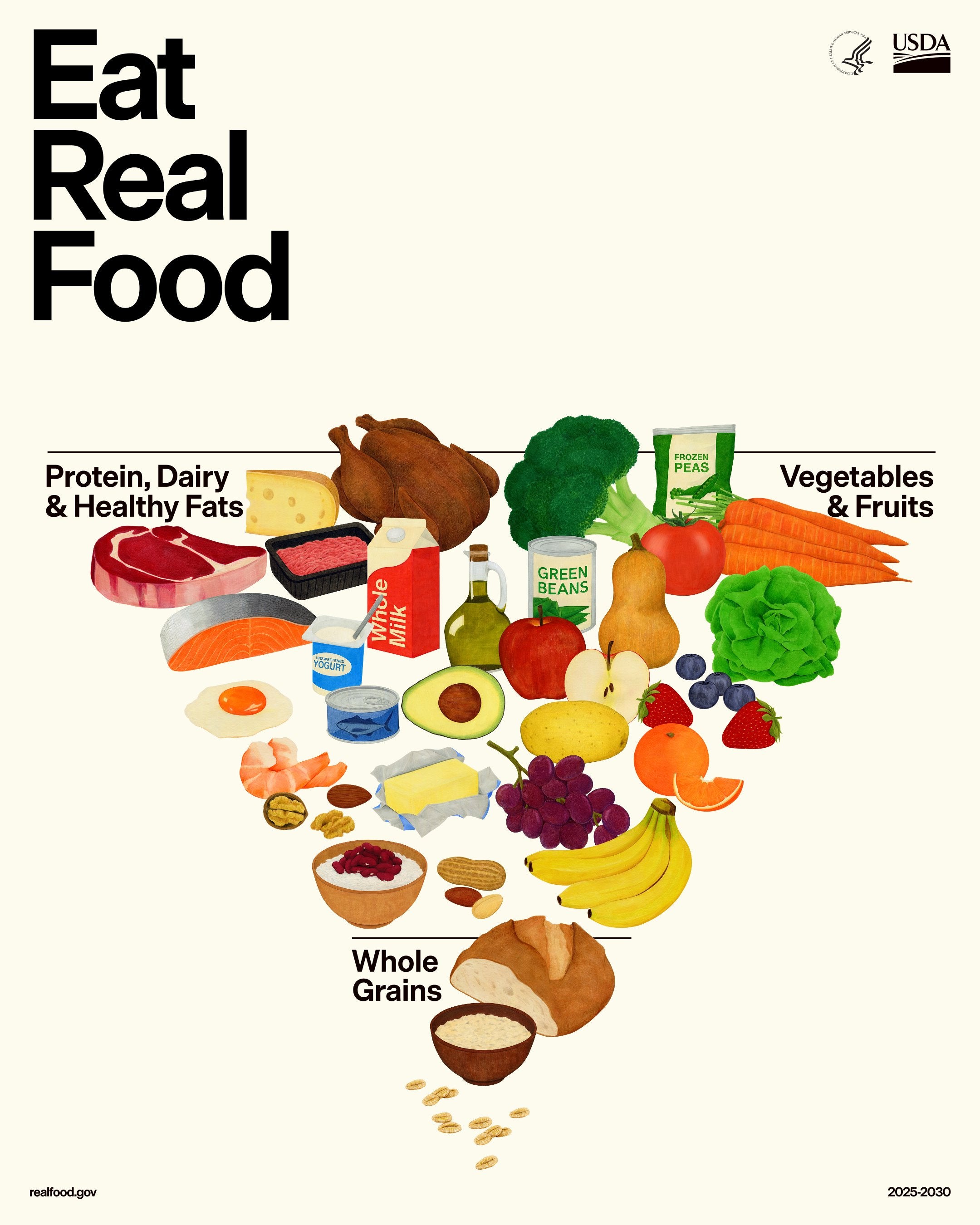
On January 7, 2026, the U.S. Departments of Health and Human Services (HHS) and Agriculture (USDA) released the 2025–2030 Dietary Guidelines for Americans, marking one of the most dramatic shifts in federal nutrition advice in decades. These guidelines — including a striking “upside-down” food pyramid — emphasize whole foods, higher protein, healthy fats, and a reduced role for processed carbohydrates and added sugars. (WebMD)
|
|
What the New Food Pyramid Looks Like |

|
| The classic 1992 USDA food pyramid many Americans grew up with (grains at the base). |
The new pyramid flips traditional guidance: proteins, vegetables, fruits, dairy, and healthy fats take priority, while grains and refined carbohydrates are visually downplayed. (Forbes)
🧠 Expert Perspectives: What Nutritionists Are Saying
The new guidance has drawn mixed reactions from health professionals:
📌 Support & Praise
-
Reduced added sugars and processed foods
Many experts agree that explicitly discouraging ultra-processed foods and added sugars is positive and long overdue. These messages align with broad scientific evidence linking processed foods to chronic disease risk. (The Nutrition Source) -
Emphasis on nutrient density
Shifting toward nutrient-dense foods (vegetables, lean proteins, healthy fats) moves toward real-food eating patterns that many dietitians already recommend. (Eat This Not That) -
Protein at every meal
Some nutrition professionals note that ensuring adequate protein — especially for older adults and people with higher activity levels — can support muscle health and satiety. (WebMD) -
AMA supportive of food-as-medicine framing
Leaders in medicine have echoed that food should be thought of as medicine, giving clinicians clearer nutrition narratives to use with patients. (Forbes)
📍 Criticisms & Cautions
-
Protein recommendations may be too high: Many dietitians worry that the guideline’s 1.2–1.6 g protein per kg target exceeds what most healthy adults need, and could crowd out fruits, vegetables and high-fiber foods. Kidney workload and overall balance matter here. (WebMD)
-
Saturated fat and red meat remain controversial: While the guidelines keep the cap on saturated fat at ~10% of daily calories, critics say promoting red meat and full-fat dairy without nuanced messaging could confuse consumers and contradict decades of cardiovascular research. (The Nutrition Source)
-
Fiber & plant foods still essential: Some academics argue the new plan doesn’t sufficiently emphasize high-fiber foods — one of the biggest shortfalls in typical American diets. (Stanford Medicine)
-
Political and scientific tension: Nutritionists have pointed out that the science base behind some recommendations (especially around saturated fat and ultra-processed foods) is still evolving and not universally agreed upon. (Vox)
- New Inverted HHS Food Pyramid Receives Grade "B": Cardiologist Dr. Peter McCullough gave the pyramid a "B" grade, applauding the reduction in starches and sugars but criticizing the defense of saturated fats, which he links to cardiovascular disease and recommends limiting severely. (Focal Points)
Critics, however, raise concerns:
- Plant-based advocates, like the Physicians Committee for Responsible Medicine, argue it overpromotes animal products despite sufficient protein in typical American diets.
- Organic advocates call for clearer standards on animal products to avoid antibiotics and hormones.
🥗 Practical Takeaways for Your Daily Eating
Here’s how to apply the guidelines in everyday meals — without needing to memorize grams of anything:
👍 What to Eat More Of
-
Protein at each meal: eggs, legumes, fish, poultry, lean meat, yogurt, cottage cheese — aim for distribution so you feel full and energized. (WebMD)
-
Vegetables & fruits: make ½ your plate veggies and fruit in meals and snacks. Frozen or canned (no added sugar/salt) count too. (Healthline)
-
Healthy fats: olive oil, avocados, nuts, seeds, natural nut butters. (Healthline)
-
Whole grains: brown rice, quinoa, oats — prioritize these over white bread and pasta. (Men's Journal)
🚫 What to Limit or Avoid
-
Added sugars: aim to keep added sugars very low (the guidelines recommend minimizing them entirely). (The Nutrition Source)
-
Highly processed foods: skip chips, sugary drinks, fast foods, and ready-to-eat snacks. (FoodIndustry.Com)
-
Refined carbs: replace white bread, sugary cereals, and sweet baked goods with whole grains and fruit. (Men's Journal)
-
Alcohol: Rather than count drinks, think in terms of “less is better” if you choose to drink. (Healthline)
🍽 Simple Daily Plate Example
Breakfast
-
Greek yogurt
-
Fresh berries
-
Chopped nuts or seeds
Lunch
-
Grilled chicken (or fish/tofu)
-
Large mixed-vegetable salad
-
Olive oil–based dressing
-
Quinoa or another whole grain
Snack
-
Apple slices
-
Almond butter (or another natural nut butter)
Dinner
-
Baked salmon (or lean meat/legumes)
-
Roasted vegetables (e.g., broccoli, carrots, peppers)
-
Lentils or beans
Drinks
-
Water
-
Unsweetened tea or black coffee
📌 Bottom Line
The 2025–2030 Dietary Guidelines for Americans represent a bold reimagining of how the U.S. government frames nutrition advice — with an iconic inverted food pyramid, a stronger spotlight on protein, real foods, and processed food avoidance, and evolving expert debate on dietary fats and protein needs. (Healthline)
Whether you see it as a welcome update or a controversial pivot, what matters for most people is balanced, nutrient-rich eating that supports long-term health — and plenty of whole foods, fiber, and moderation remains central.

.png)


.png)
Comments
Post a Comment