Insulin Resistance and Pancreatic Cancer (2026 Update): What the Latest Evidence Really Shows
Introduction
A 2023 study described insulin resistance as a “silent driver” of pancreatic cancer. While directionally correct, this claim requires careful interpretation in light of newer (2023–2026) evidence.
Pancreatic ductal adenocarcinoma (PDAC) remains one of the most lethal cancers globally. Increasing attention has shifted toward metabolic dysfunction—especially insulin resistance—as a modifiable risk factor. |
| How insulin resistance may contribute to the development of cancer. Illustration by The Epoch Times, Shutterstock |
But how strong is the evidence?
🔬 2025–2026 Evidence Update: Strong Association, Uncertain Causation
1. Epidemiology: Consistent but Not Definitive
Recent large-scale analyses confirm:
Type 2 diabetes → ~1.5–2.0× increased pancreatic cancer risk
Elevated fasting glucose → dose-dependent risk increase
Obesity + metabolic syndrome → independent contributors
👉 A 2024–2025 pooled analysis (multi-cohort metabolic studies) reinforced:
Hyperinsulinemia precedes diagnosis in some cases
But new-onset diabetes frequently occurs shortly before cancer detection
2. Reverse Causation: Now Better Recognized
Newer research increasingly supports:
Pancreatic tumors can induce systemic insulin resistance
Tumor-secreted factors (e.g., exosomes, cytokines) disrupt glucose metabolism
This may occur years before clinical diagnosis
👉 Key implication:
Insulin resistance may be both a risk factor AND an early biomarker
🧠 Mechanistic Insights (What’s Biologically Plausible)
A. Insulin / IGF-1 Signaling Axis
Activates PI3K–AKT–mTOR pathway
Promotes:
Cell proliferation
Angiogenesis
Tumor survival
B. Chronic Inflammation
Insulin resistance drives:
TNF-α, IL-6 elevation
NF-κB activation
Oxidative stress
👉 These contribute to a pro-tumor microenvironment
C. Metabolic Reprogramming
Cancer cells exploit:
Glucose uptake
Aerobic glycolysis (Warburg effect)
Lipid and amino acid metabolism
👉 Insulin resistance may amplify nutrient availability for tumor growth.
🧪 Clinical Implications (2026 Perspective)
✔ What is supported:
Improving insulin sensitivity improves:
Metabolic health
Inflammation
Overall cancer risk profile
⚠️ What is NOT proven:
That lowering insulin alone:
Prevents pancreatic cancer
Slows tumor progression
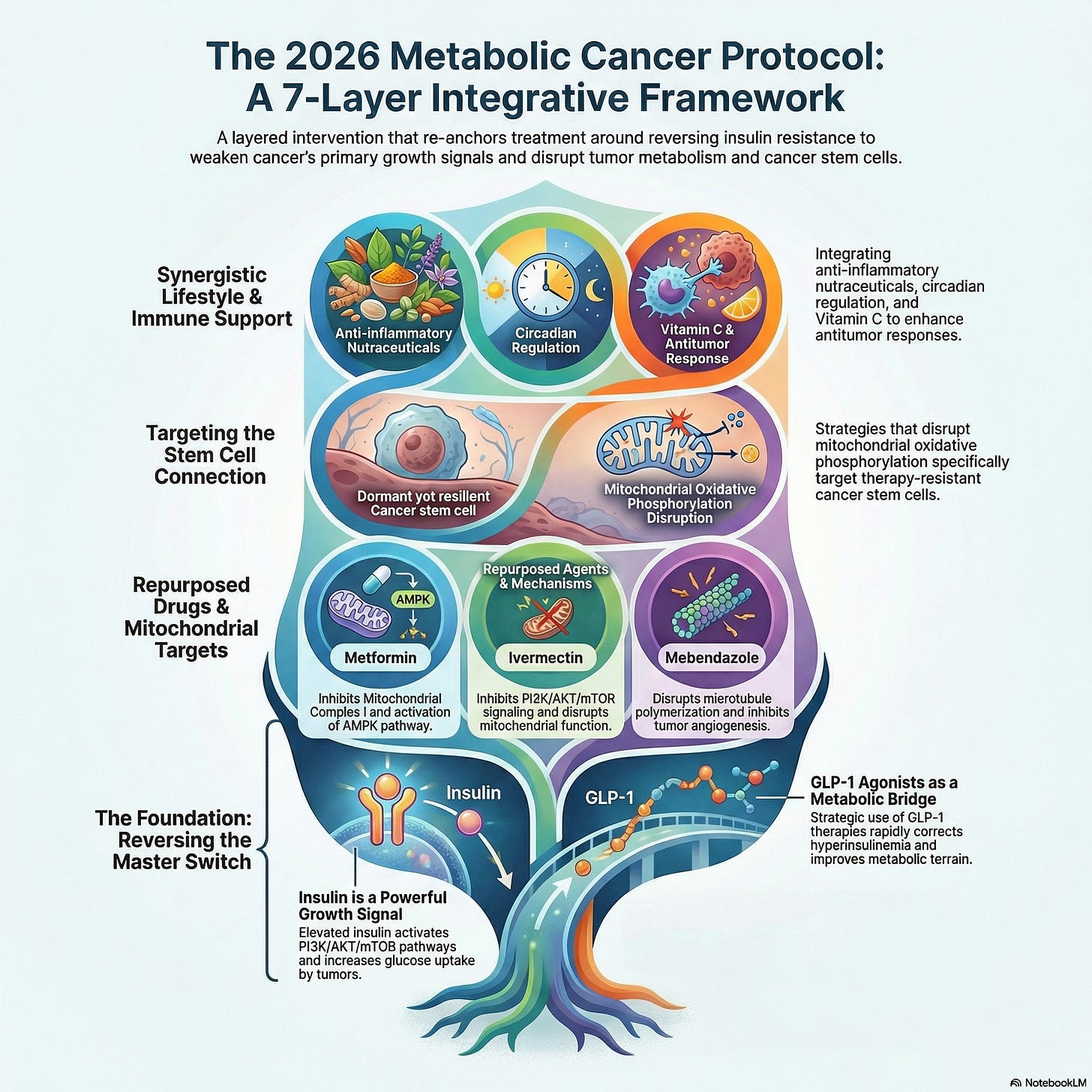
🧬 Integration with Metabolic Oncology
This topic strongly overlaps with your core theme:
Metabolic vulnerabilities in cancer include:
Glucose dependence
Insulin/IGF signaling
Mitochondrial dysfunction
Potential adjunct strategies under investigation:
(Note: exploratory, not standard of care)
Metformin (AMPK activation)
Ketogenic / low-glucose diets
Repurposed drugs:
Ivermectin
Mebendazole
👉 These aim to:
Disrupt cancer metabolism
Enhance treatment sensitivity
Media Framing vs Scientific Reality
The “silent driver” narrative (e.g., The Epoch Times) reflects a common pattern:
What media gets right:
Metabolic health matters
Insulin is biologically active in cancer
What it misses:
Bidirectional causality
Strength of evidence hierarchy
Clinical uncertainty
🧾 Conclusion
Insulin resistance is clearly linked to pancreatic cancer—but not in a simple cause-effect way.
It functions as:
A risk factor
A metabolic amplifier
A potential early warning signal
References (2020–2026)
Pannala R, et al. New-onset diabetes: a potential clue to pancreatic cancer. Lancet Gastroenterol Hepatol.
Sharma A, et al. Hyperinsulinemia and cancer risk: mechanisms and evidence. Cancers (2023).
Andersen DK, et al. Diabetes, pancreatogenic diabetes, and pancreatic cancer. Diabetes (2022).
Ying H, et al. Metabolic reprogramming in pancreatic cancer. Nat Rev Cancer.
NIH / NCI SEER updates (2025)
.png)
.png)

.png)


.png)


Comments
Post a Comment