Conventional medicine saves lives, but innovative and integrative approaches can extend and enhance them
How Ivermectin Fights Cancer: Mechanisms of Action Explained (2025)
Get link
Facebook
X
Pinterest
Email
Other Apps
-
Introduction
In recent years, ivermectin, a drug renowned for its anti-parasitic properties and celebrated with a Nobel Prize in Physiology or Medicine in 2015, has emerged as a subject of intense scientific and public interest for its potential applications beyond its traditional use. This drug was once labeled "horse de-wormer."
Among these, its possible role in cancer treatment has garnered significant attention. This article explores the current state of research into ivermectin's anti-cancer properties, focusing on multiple identified mechanisms through which it may combat cancer cells.
From inhibiting tumor cell proliferation and inducing apoptosis to modulating immune responses, preclinical studies have demonstrated promising results across various cancer types, including breast, colorectal, and pancreatic cancers.
However, as of 2025, the transition from promising laboratory results to actual clinical application remains limited, with only a few human trials conducted so far. Despite growing scientific interest, the topic has also become a source of controversy—especially on social media platforms.
Extensive research reveals it has multiple powerful anti-cancer mechanisms of action. Let’s look at the science behind how it works.
2023 Sep - Man-Yuan Li et al - Ivermectin induces non-protective autophagy by down-regulating PAK1 and apoptosis in lung adenocarcinoma cells.
2023 May - Samy et al - Eprinomectin: a derivative of ivermectin suppresses growth and metastatic phenotypes of prostate cancer cells by targeting the β-catenin signaling pathway. (Prostate Cancer)
2022 Nov - Lotfalizadeh et al - The Anticancer potential of Ivermectin: Mechanisms of action and therapeutic implications.
2022 Oct - Jian Liu et al - Progress in Understanding the Molecular Mechanisms Underlying the Antitumour Effects of Ivermectin.
2022 Jun - Daeun Lee et al - Ivermectin suppresses pancreatic cancer via mitochondria dysfunction. (Pancreatic Cancer)
2021 Jan - Mingyang Tang et al - Ivermectin, a potential anticancer drug derived from an antiparasitic drug. In a study that screened drugs for the treatment of nasopharyngeal cancer, IVM significantly inhibited the development of nasopharyngeal carcinoma in nude mice at doses that were not toxic to normal thymocytes (PubMed).
2019 Sep Intuyod et al - Anti-parasitic Drug Ivermectin Exhibits Potent Anticancer Activity Against Gemcitabine-resistant Cholangiocarcinoma In Vitro.
2018 Feb - Juarez et al - The multitargeted drug ivermectin: from an antiparasitic agent to a repositioned cancer drug.
The multitargeted drug ivermectin: from an antiparasitic agent to a repositioned cancer drug (2018 Feb - Juarez et al)
Satoshi Omura at the Kitasato Institute discovered Ivermectin in 1979 and was awarded a Nobel Prize in Physiology or Medicine for this discovery in 2015.
Ivermectin was FDA Approved for human use in 1987 to orally treat onchocerciasis, also known as river blindness, caused by the blackfly-transmitted parasite Onchocerca volvulus
Ivermectin is annually taken by close to 250 million people
most patients treated with Ivermectin have no side-effects other than those caused by the immune and inflammatory responses against the parasite, such as fever, pruritus, skin rashes and malaise
maximum concentration in plasma is reached 4-5 h after its oral administration
its half-life is approximately 19 h and is metabolized in the liver by the cytochrome CYP1A and CYP3A4 complexes, generating 10 metabolites, mostly demethylated and hydroxylated.
Its excretion is mainly by feces and only 1% is excreted in the urine
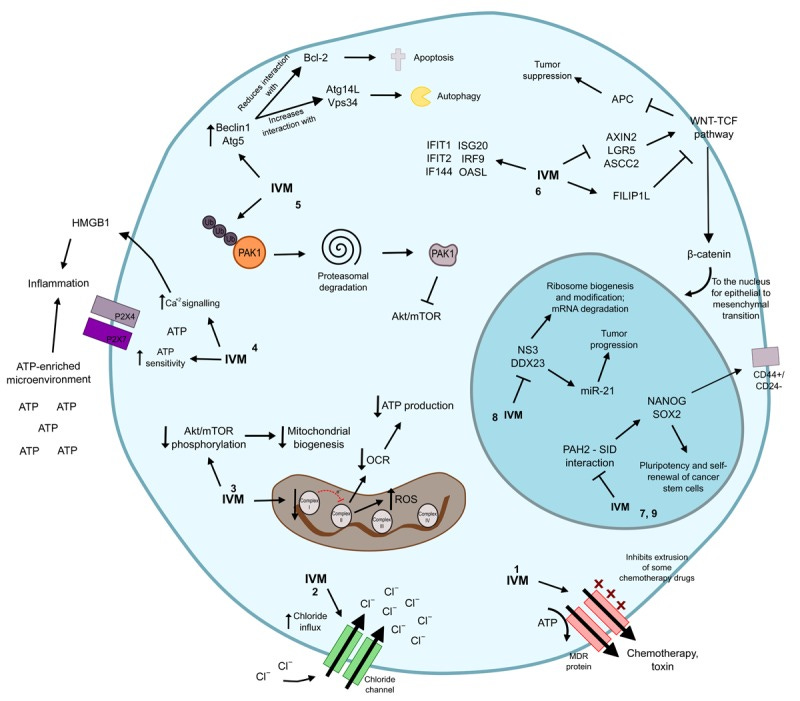
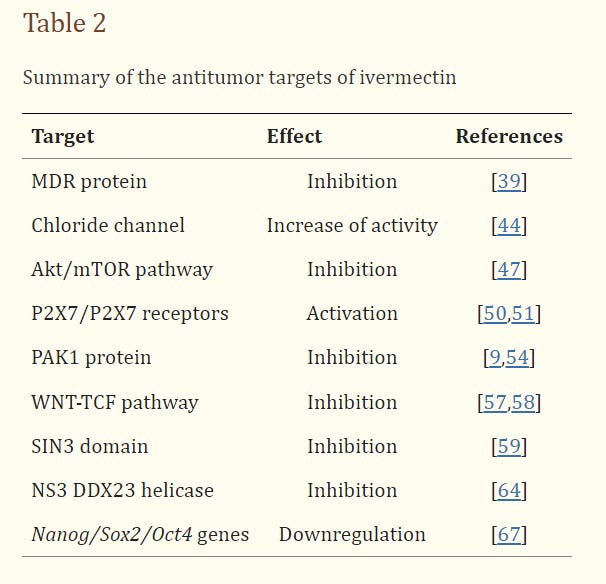
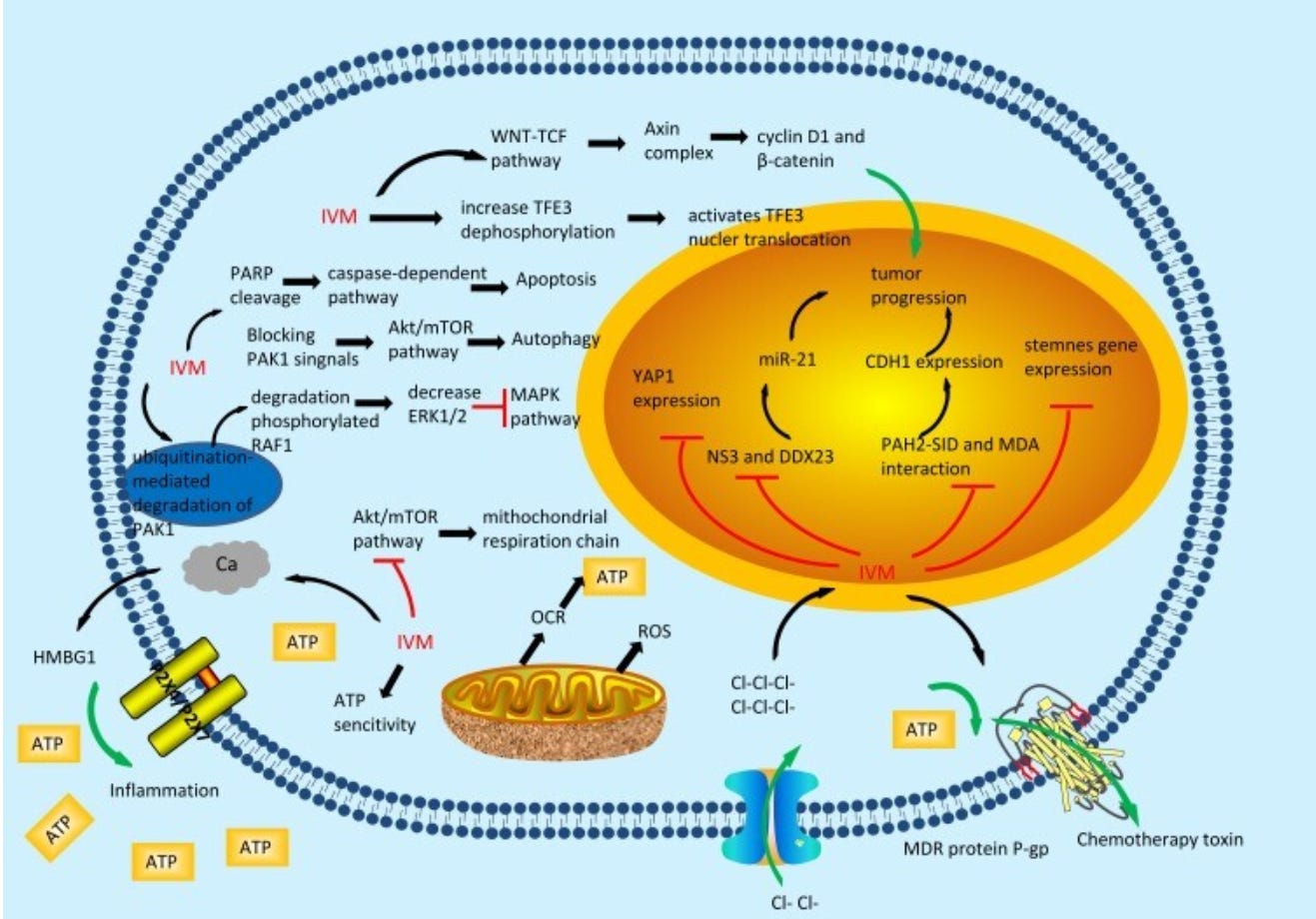
Ivermectin exerts antitumor effects in different types of cancer.
What this means Clinically:
Chloride channel - Acute myeloid leukemia - induced cell death
Akt/mTOR path - glioblastoma, renal cancer cell lines - inhibition of mitochondrial biogenesis or function, oxidative stress, DNA damage
P2X7 (ICD) overexpression promotes tumor growth and metastases - ivermectin potentiates immunogenic cell death (ICD) in triple negative breast cancer cells
PAK1 (Autophagy) - glioblastoma and ovarian cancer cell lines - Ivermectin promotes autophagy through this pathway
WNT-TCF pathway - glioblastoma, colon cancer, melanoma - Ivermectin exerts anti-proliferative function through this pathway (possibilities to use Ivermectin to block WNT-TCF dependent cancers like breast, skin, lung)
SIN3 Domain - breast cancer (Ivermectin acts as epigenetic modulator to alter gene expression and decrease tumor growth)
NS3 helicase - glioma cells - Ivermectin had anti-tumor effects by acting as helicase inhibitor.
In Vitro Studies:
breast cancer, ovarian, prostate, colon, pancreas, head and neck, melanoma - inhibits cell proliferation, induction of apoptosis, autophagy, reversion of tamoxifen resistance, inhibits metastases.
glioblastoma - growth inhibition, apoptosis, and anti-angiogenesis.
In Vivo Studies (done on immune deficient mice):
acute myeloblastic leukemia - reduce tumor volume up to 70%
glioblastoma - reduce tumor volume up to 50%
breast cancer - reduce tumor volume up to 60%
glioma - reduce tumor volume up to 50% (at 0.24mg/kg), however at human dose equivalent to 0.8mg/kg tumors were not detectable!
colon cancer - reduce tumor volume up to 85%
median dose employed was equivalent to 0.4 mg/kg in humans from 10 to 42 days (oral, intraperitoneal or intra-tumoral)
the in vitro and in vivo antitumor activities of Ivermectin are achieved at concentrations that can be clinically reachable based on the human pharmacokinetic studies done in healthy and parasited patients.
specific mechanism of IVM-mediated cytotoxicity in tumor cells is unclear; it may be related to the effect of IVM on various signaling pathways.
IVM seems to induce mixed cell death in tumor cells.
CONCLUSIONS: Ivermectin selectively inhibits the proliferation of tumors at a dose that is not toxic to normal cells and can reverse the MDR (multi-drug resistance) of tumors.
In healthy volunteers, the dose was increased to 2 mg/kg, and no serious adverse reactions were found
Unfortunately, there have been no reports of clinical trials of IVM as an anticancer drug
large number of research results indicate that IVM affects multiple signaling pathways in tumor cells and inhibits proliferation, IVM may cause antitumor activity in tumor cells through specific targets
Ivermectin regulates the tumor microenvironment, inhibits the activity of tumor stem cells and reduces tumor angiogenesis and tumor metastasis.
It has become increasingly clear that Ivermectin can induce a mixed cell death mode involving apoptosis, autophagy and pyroptosisdepending on the cell conditions and cancer type.
Ivermectin can enhance the sensitivity of chemotherapeutic drugs and reduce the production of resistance. Therefore, IVM should be used in combination with other drugs to achieve the best effect.
2019 Sep Intuyod et al - Anti-parasitic Drug Ivermectin Exhibits Potent Anticancer Activity Against Gemcitabine-resistant Cholangiocarcinoma In Vitro
Ivermectin studied on cholangiocarcinoma cells that were chemo resistant (gemcitabine)
Ivermectin inhibited cancer cell proliferation and colony formation in a dose and time dependent manner(!)
Ivermectin caused S-phase cell cycle arrest and cell death
Conclusion: “Ivermectin might be useful as an alternative treatment for cholangiocarcinoma, especially in patients who do not respond to chemo.”
Colorectal cancer is 3rd most common cancer worldwide, lacks effective therapy
Ivermectin tested on colorectal cancer cell lines
Ivermectin dose-dependently inhibited colorectal cancer growth
promoted cell apoptosis
promoted total and mitochondrial ROS production (reactive oxygen species)
induced colorectal cancer cell S-phase arrest
Conclusion: Ivermectin might be a new potential anticancer drug therapy for human colorectal cancer
2022 Oct - Jian Liu et al - Progress in Understanding the Molecular Mechanisms Underlying the Antitumor Effects of Ivermectin
PAK1 (Autophagy) - Ivermectin, acts as PAK1 inhibitor and inhibits growth of breast cancer, ovarian cancer, glioblastoma and NF2 tumors and involved in cell death in Nasopharyngeal carcinoma and melanoma.
Apoptosis (Caspase Dependent) - Ivermectin induces apoptosis in glioblastoma, chronic myeloid leukemia cells, also breast cancer, ovarian cancer.
Immunogenic Cell Death (ICD - P2X7 signaling) - ivermectin induces cell death in triple negative breast cancer.
YAP1 Inhibition - hepatocellular and cholangiocarcinoma, colorectal cancer, ovarian cancer, gastric cancer - ivermectin exerts anti-tumor effects
WNT Path (cancer progression - differentiation, metastasis, cell senescence, tumor initiation, tumor growth) - Ivermectin inhibits this path - inhibits colon cancer and lung cancer, ivermectin also limits formation of cancer stem cells.
TF3 Path - ivermectin stimulates apoptosis of melanoma cells.
RNA Helicase Inhibition - ivermectin inhibits cell invasion and proliferation of glioma cells
SID Peptide (SIN3A/B) - Ivermectin inhibits breast cancer progression, also restores tamoxifen sensitivity
Akt/mTOR inhibition - Ivermectin inhibits mitochondrial respiration - glioblastoma, CML leukemia (some cancers like breast, leukemia and lymphoma are more metabolically active and depended on mitochondria - more responsive to ivermectin inhibition)
ivermectin is an angiogenesis inhibitor
ivermectin has anti-mitotic activity
In humans, toxicity of ivermectin is very low, no serious adverse reactions have been found in healthy volunteers at dose up to 120 mg (~2 mg/kg) (Reference: GuzzoCA, FurtekCI, PorrasAG, et al. Safety, tolerability, and pharmacokinetics of escalating high doses of ivermectin in healthy adult subjects. J Clin Pharmacol. 2002;42(10):1122–1133.)
2023 May - Samy et al - Eprinomectin: a derivative of ivermectin suppresses growth and metastatic phenotypes of prostate cancer cells by targeting the β-catenin signaling pathway
Ivermectin (derivative) inhibits prostate cancer cell viability, migration capacities
Ivermectin induces apoptosis, autophagy (via ROS)
Ivermectin downregulates expression of cancer stem cell markers
Conclusion: Ivermectin has tremendous potential to target metastatic prostate cancer cells and provides new avenues for therapeutic approaches to advanced prostate cancer
2023 Sep.23 - Man-Yuan Li et al - Ivermectin induces nonprotective autophagy by downregulating PAK1 and apoptosis in lung adenocarcinoma cells
Ivermectin was studied on lung adenocarcinoma cells
Ivermectin strikingly impeded colony formation and viability of cancer cells, along with cell proliferation, caused apoptosis and enhanced autophagy
Ivermectin efficiently suppressed cellular growth of lung adenocarcinoma cells in vivo among nude mice
Conclusion
Ivermectin exerts anti-cancer effects through at least 15 different pathways proven in the medical literature, both in vitro and in vivo!
(You get a nice summary of these 15 pathways from the 2021 paper by Mingyang Tang et al.)
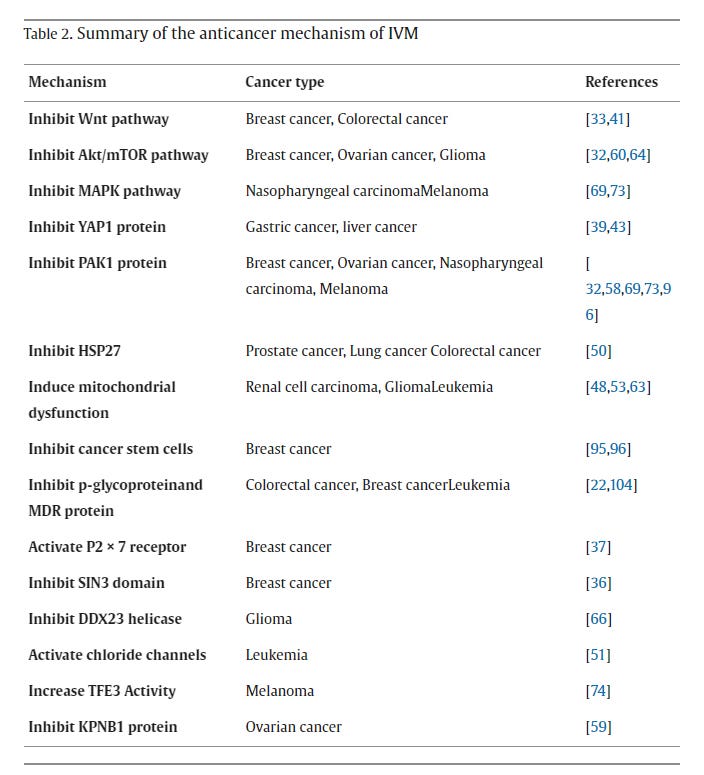
First, let’s quickly summarize the anti-cancer mechanisms (a quick summary can be found in 2022 paper by Loftalizadeh et al):
Ivermectin stops cancer cell migration, invasion and metastasis (via PAK1 inhibition - seen in 70% of all cancers, EMT inhibition, RNA Helicase inhibition)
Ivermectin causes cancer cell mitochondrial dysfunction (inhibits mitochondrial biogenesis, increases reactive oxygen species selectively only in cancer cells)
Ivermectin regulates tumor microenvironment (to inhibit tumor growth and progression, via P2X7 path, ICD - mediates immunogenic cell death)
Ivermectin inhibits cancer stem cells (which are responsible for tumor initiation, progression and recurrence)
Ivermectin has anti-mitotic activity (interacts with mammalian tubulin)
Ivermectin is an epigenetic regulator of cancer to inhibit cancer progression (alters gene expression to inhibit cancer progression, SIN3A, EMT)
Ivermectin can overcome tumor multi-drug resistance (MDR).
What cancers can Ivermectin treat?
The top 5 COVID-19 mRNA Vaccine Induced Turbo Cancers are: lymphomas, brain cancers, breast cancers, colon cancers and lung cancers (signals also seen in leukemias, hepatobiliary cancers, testicular cancers, sarcomas and melanomas).
Ivermectin in-vitro or in-vivo studies and case reports:
breast cancer, especially triple negative breast cancer which is often seen in COVID-19 mRNA Vaccinated women and has the worst prognosis. (Pharmacol Res 2020).
Pancreatic Cancer (2022 Jun - Daeun Lee et al) - Ivermectin suppresses pancreatic cancer via mitochondria dysfunction.
What dose of Ivermectin to treat COVID-19 mRNA Vaccine Turbo Cancer?
Guzzo et al published a paper in 2022 on the “Safety, tolerability, and pharmacokinetics of escalating high doses of Ivermectin in healthy adult subjects”
The highest dose tested to be safe with no side effects, was 2 mg/kg.
Max concentration in plasma is 4 hours after oral intake
Half life is 18 hours
Dr.David E. Scheim PhD, Blacksburg VA also wrote an interesting article on Ivermectin Safety in Sep.7, 2021 (Source)
Several studies have shown that Ivermectin’s anti-cancer effects are DOSE-DEPENDENT (higher dose = better response)
Warning: not to be taken as medical advice - hypothetical situation: if I was faced with a COVID-19 Vaccine Induced Turbo Cancer or an advanced stage cancer, I would be looking at an Ivermectin dose of 2mg/kg orally, daily or every two days.
Dr. Justus Hope MD published an article on Aug.29, 2023 that discusses anecdotal cases of Stage 4 Colon cancer, Stage 4 Ovarian Cancer responding to Ivermectin with dramatic drop in Tumor markers.
Also mentioned is a “High Dose Ivermectin” regimen of 2mg/kg per day for a doctor with Stage 4 Gallbladder cancer, taken for over a year, with visual side effects for a few days initially which resolved.
Also described is a case of enlarged Prostate suspicious for cancer, and a 5 week Ivermectin 45mg/day regimen that dropped PSA from 89.1 to 10.9 with resolution of nocturnal urinary frequency. For a 100kg man, that is a dose of 0.45mg/kg, significantly lower than the 2 mg/kg safe dose published by Guzzo et al.
The article describes a cancer patient with a neck tumor and lung metastases on a High Dose Ivermectin regimen of 2.45mg/kg daily.
I believe that it is a reasonable hypothesis that COVID-19 mRNA Vaccine Turbo Cancer patients could benefit from High Dose Ivermectin regimens, such as 2mg/kg and we urgently need more research to be done in this area.
(mRNA Vaccine Induced Turbo Cancers such as leukemias, glioblastomas, breast cancers (including triple negative), colon cancers, hepatobiliary cancers, lung cancers, melanomas, renal cell cancers, ovarian cancers, prostate cancers - as there is already evidence in the literature)
How would you know if your cancer was caused by Covid shot? I did all 4 and in 2023 was diagnosed with adenocarcinoma of my lung. Surgery and then metastatic to adrenal glands. More surgery and then chemo. Everyone says I should take the ivermectin at this point of stage 4. He’s moved me to immunotherapy now but found more spots now on other lung. I also have severe stenosis in my arteries. Would it be safe to take for me? I’m very interested
Medically Reviewed by: Dr Frank Yap, MD | Written by: OneDayMD Editorial Team | Last Updated: September 2026 Dr. William Makis MD (McGill Medicine, 110+ peer-reviewed publications) has treated a large volume of cancer patients using repurposed drugs since 2023 and has documented outcomes publicly on Substack and X. This continuously updated 2026 guide compiles Dr. Makis's latest protocols (from his Substack, X posts through 2026, and direct patient correspondence). We cross-reference his exact dosages, schedules, combinations, safety data, sourcing, and real patient outcomes (anonymized but verifiable on his channels). Important Disclaimer: This content is for educational purposes only and does not constitute medical advice. Ivermectin is used off-label for cancer treatment. Always consult with a knowledgeable physician whom you trust to manage your health. Individual results may vary. Do not self-medicate with ivermectin without proper bloodwork and medica...
Medically Reviewed by: Dr Frank Yap, MD | Written by: OneDayMD Editorial Team | Last Updated: September 2026 If you have been diagnosed with cancer, or have a loved one that is suffering from cancer, chances are you have heard about the Joe Tippens Cancer Protocol. The Fenbendazole Cancer Protocol has been gaining rapid interest over the past years following some fenbendazole advanced cancer success stories and a recent peer-reviewed publication, " Real-world Clinical Outcomes of Ivermectin and Mebendazole in Cancer Patients : Results from a Prospective Observational Cohort ( Anticancer Research 2026 )" We have seen tremendous demand for some sort of guide on how to use fenbendazole for cancer as there is also tremendous confusion both from the healthcare and non-healthcare communities. Joe Tippens founded the protocol (1) after he was told a s...
GLP-1-based medications have changed the treatment of obesity by making substantial, sustained weight loss possible for many people. But as these medicines become more widely used, another question has become increasingly important: How much of the weight lost on a GLP-1 drug comes from muscle or other lean tissue—and can that loss be minimized? The evidence shows a nuanced answer. People taking semaglutide, tirzepatide and related incretin-based medicines generally lose much more fat than lean tissue . At the same time, absolute lean mass usually falls during substantial weight loss. Importantly, lean mass is not the same thing as skeletal muscle : DXA-based “lean mass” also includes water, organs and other non-fat tissues. Therefore, a finding that lean mass decreased does not automatically mean that the same amount of skeletal muscle was lost. Recent 2026 meta-analyses suggest that roughly one-quarter to one-third of total weight lost with incretin therapy may be classified as lean ...
Quick Summary: DMSO (Dimethyl Sulfoxide) is a naturally occurring compound with decades of research behind its use as an anti-inflammatory, analgesic, and cellular-protective agent. FDA-approved for interstitial cystitis, it has been used off-label by athletes, physicians, and patients for musculoskeletal injuries, chronic pain, wound healing, and more. This guide covers what DMSO is, how it works, the evidence for its key uses, safety considerations, dosing guidance, and where to find practitioners who use it. All off-label uses are experimental. Consult a qualified healthcare provider before use. A Patient Story: From Lung Transplant List to Clear CT Scans In 2022, Erica Eyres, a vigorous fifty-six-year-old aerobics instructor who had struggled to breathe, was given “absolutely devastating” news: She might need a lung transplant. She had never smoked, ran cross-country track in high school, and was a personal trainer for years, but, by 2024, a transplant assessment was arranged. “I d...
Medically Reviewed by: OneDayMD Editorial Team | Last Updated: August 2026 An updated, evidence-based guide to ivermectin's federal and state legal status, how to obtain a prescription, which states allow pharmacist-dispensed or OTC access, and a directory of pharmacies that fill ivermectin prescriptions in the US. Quick Answer (AI & Search Summary) Ivermectin is still classified federally as a prescription-only drug for human use. It has not been reclassified as OTC by the FDA. However, five states — Arkansas, Idaho, Louisiana, Tennessee, and Texas — have passed laws letting pharmacists dispense it without a doctor's prescription, and roughly half a dozen more have active bills. Everywhere else, you need a prescription from a doctor, urgent care provider, or telehealth service. Individual pharmacists retain the right to decline to dispense or stock it even where state law allows it. Table of Contents Current Legal Status (Federal & State) State-by-...
Medically Reviewed by: OneDayMD Editorial Team | Last Updated: August 2026 Table of Contents: Editor's Preface Introduction Fenbendazole Case Series Compilation (alphabetical) Breast Cancer Success Stories (130 cases) Brain Cancer (including Glioblastoma) (135 cases) Bladder Cancer Success Stories (including kidney cancer) (37 cases) Cervical Cancer (6 cases) Colorectal Cancer (including Appendix cancer) (85 cases) Esophageal and Stomach cancer (23 cases) Endometrial Cancer (13 cases) Gastric (Stomach) cancer (see Esophageal and Stomach Cancer ) Head and Neck Cancer (17 cases) Kidney Cancer Case Series (including urinary (urothelial) bladder cancer) Liver and Bile Duct Cancer (Hepato-biliary system) (9 cases) Lung Cancer (62 cases) Leukemia (13 cases) Lymphoma (28 cases) Melanoma (refer to ...
OneDayMD Master Evidence Guide • Updated September 23, 2026 Semaglutide, tirzepatide, oral GLP-1 medicines, retatrutide and the next generation of metabolic therapies have changed the obesity and cardiometabolic treatment landscape. But the phrase “GLP-1 drug” can hide major differences in mechanism, indication, dose, study population and clinical evidence. This master guide organizes the most important clinical trials into an ebook-style reference—from the landmark STEP and SURMOUNT obesity trials to SELECT , FLOW , SUMMIT , ESSENCE , OASIS 4 , ATTAIN-1 , TRIUMPH and the emerging CagriSema program. 2026 update: The field has moved beyond injections alone. Oral semaglutide (Wegovy tablets) and orforglipron (Foundayo) are now U.S. FDA-approved options for weight management, while higher-dose semaglutide (Wegovy HD) has also entered clinical use. Retatrutide remains investigational, despite substantial Phase 3 result...
Medically Reviewed by: OneDayMD Editorial Team | Last Updated: April 2026 In September 2024, a first-of-its-kind protocol utilizing ivermectin, fenbendazole, and mebendazole for cancer treatment was peer-reviewed and officially published in the Journal of Orthomolecular Medicine . Led by researchers Dr. Ilyes Baghli, Dr. Pierrick Martinez, and FLCCC's Dr. Paul Marik, the protocol applies antiparasitic drugs — originally developed to combat parasites — to cancer treatment, building on emerging preclinical and clinical evidence of their anticancer properties. This trio of repurposed drugs has been shown to disrupt the growth of cancer cells, particularly by targeting microtubules, the essential structures that allow cancer to multiply uncontrollably. What makes this protocol even more potent is the synergistic effect when these drugs are used together, creating a powerful new affordable weapon against cancer. Journal of Orthomolecular Medicine 2024 Targeting the Mitochondrial-Stem C...
Medically Reviewed by: Dr Frank Yap, MD | Written by: OneDayMD Editorial Team | Last Updated: August 2026 This article discusses dosage considerations and key factors related to the use of ivermectin in cancer treatment. Much of the publicly available information regarding ivermectin dosage is based on the standard dosing recommendations developed by Merck for the treatment of parasitic infections. These dosages are often cited without distinction from the higher or alternative dosing regimens that have been explored in cancer-related research. Dosages used for parasitic infections may not correspond to those investigated in oncology studies. Potential dosing strategies may vary depending on several factors, including the patient's body weight, cancer type, cancer stage and grade, overall health status, and liver function. ...
Medically & Technically Reviewed by: OneDayMD Editorial Team | Originally Published: August 9, 2026 | Updated: September 2026 Quick Answer There is no single "best" smart glasses for visual impairment in 2026 — the right pick depends on how much usable vision remains. For low vision (residual central vision from macular degeneration, diabetic retinopathy, or Stargardt disease), medical-grade enhancers like eSight Go ($4,950) or Acesight VR digitally magnify and boost contrast. For blind or near-blind users, AI-interpretation glasses like Envision Glasses ($2,499), Ally Solos (from $399), or a clip-on OrCam MyEye 3 Pro (remaining dealer stock, $3,689–$4,490) read text and describe scenes aloud. The cheapest mainstream option is Meta's expanding AI-glasses lineup — Ray-Ban Meta, Meta Glasses (Adventurer/Fury), and Meta Glasses by Kylie — starting at $299, which isn't purpose-built for accessibility but has become a popular everyday alternative thanks t...



.png)
.png)


.png)


How would you know if your cancer was caused by Covid shot? I did all 4 and in 2023 was diagnosed with adenocarcinoma of my lung. Surgery and then metastatic to adrenal glands. More surgery and then chemo. Everyone says I should take the ivermectin at this point of stage 4. He’s moved me to immunotherapy now but found more spots now on other lung. I also have severe stenosis in my arteries. Would it be safe to take for me? I’m very interested
ReplyDelete