Posts

Showing posts with the label oxalates

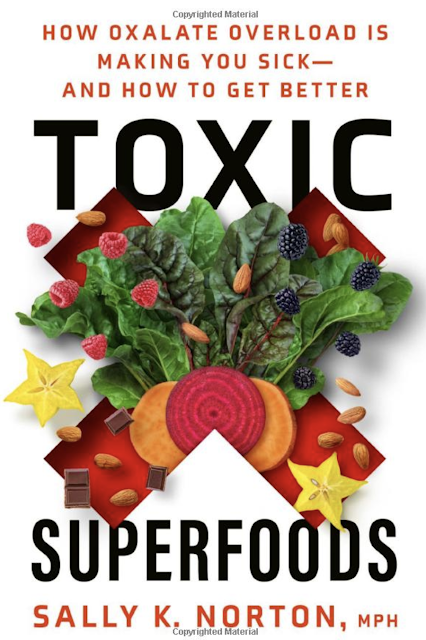
How High Oxalate Foods Wreck Your Health - Sally Norton
Image
If you’re eating a healthy diet and you’re still dealing with fatigue, inflammation, anxiety, recurrent injuries, or chronic pain, the problem could be your spinach, almonds, sweet potatoes, and other trusted plant foods. And your key to vibrant health may be quitting these so-called superfoods!? In this interview, Sally Norton, author of “ Toxic Superfoods: How Oxalate Overload Is Making You Sick — and How to Get Better ,” reviews how and why even foods we’ve been told are healthy can wreak havoc on your health. As the title of the book implies, the main culprit in question is oxalate or oxalic acid, found in many plants, beans, grains, seeds and nuts, fruits, berries and herbs. ( R ) So, just what are oxalates, why are they so bad, and how are they hidden in these superfoods that so many people are consuming? In short, it’s a naturally-occurring toxic, corrosive acid. In that state, it’s called oxalic acid. When the oxalic acid has minerals attached to it, it’s called oxalate. Chemi...

Is Soy Healthy or Harmful? The Truth About Soy (Backed by Science)

Image
It’s a controversial topic in the culinary world today — the perception some have that soy is a health food. Soybeans in the pod, you may know, look a little like short, puffy, green peas with peach fuzz on the outside. Representatives from the U.S. Food and Drug Administration (FDA) announced a boomerang-like decision on how soy protein should be viewed from now on. In fact, the agency is proposing to revoke its long-held stance that soy protein can lower your heart disease risk. The current claim, which you may have seen on various food packages, reads: “25 grams of soy protein a day, as part of a diet low in saturated fat and cholesterol, may reduce the risk of heart disease.” (1) Many health advocates claim soy must be good for you because Asian people — arguably  one of the healthiest populations on the planet  — have eaten it a lot, and have some of the lowest rates of heart disease, cancer and dementia worldwide, 2  so, it appears, the rest of the world should eat ...

Labels

Show more

Archive

Show more