Posts

Showing posts with the label vitamin c

Aspirin: The Widely Available Drug that Outsmarts Cancer Cells (2026)

Image
Aspirin is a staple in medicine cabinets worldwide, known primarily for its pain-relieving and anti-inflammatory properties. However, recent research is shedding light on a potentially game-changing role for this common medication: cancer prevention and treatment. (1) While aspirin's anticancer properties have been hinted at in various studies over the years (2), this function has largely been overlooked in favor of newer, more expensive drugs. Now, groundbreaking experiments are not only reaffirming aspirin's potential in fighting cancer but also uncovering a more potent analog that could revolutionize our approach to cancer treatment. Update: Aspirin and Cancer Prevention (2026): New Evidence Shift in 20 Years   This forgotten function of aspirin, and its even more powerful cousin, may offer new hope in the battle against one of humanity's most persistent health challenges. Let's explore the exciting developments that are causing researchers to take ...

High-Dose Intravenous Vitamin C in Cancer Care: What the Latest Science Really Shows (2026)

Image
Can High-Dose Vitamin C Improve Cancer Outcomes? Vitamin C has long been associated with immune health, but in recent years it has re-emerged in oncology research — not as a supplement, but as a pharmacologic agent when administered at very high doses intravenously. New clinical data, including a randomized phase II pancreatic cancer trial (2024) , suggest that high-dose IV vitamin C may significantly improve survival when added to standard chemotherapy , reigniting scientific and clinical interest in this once-controversial approach. This article consolidates and updates evidence from: Recent pancreatic cancer trials Mechanistic cancer biology research Earlier vitamin C oncology literature Modern combination therapy studies What Is High-Dose Vitamin C — and Why IV Matters High-dose vitamin C refers to pharmacologic concentrations of ascorbic acid (typically 50–100 grams per infusion ) administered intravenously . This distinction is critical: Oral vitamin C cannot achieve therapeu...

Potential Repurposed Therapies for Pancreatic Cancer: A Review of Emerging Approaches (2026)

Image
Abstract   Pancreatic cancer remains one of the most lethal malignancies, often diagnosed at advanced stages with limited treatment options. Recent studies and anecdotal reports suggest that repurposed drugs and alternative therapies may offer new hope for improving patient outcomes. This review examines emerging evidence on ivermectin, fenbendazole, high-dose vitamin C, and hydroxychloroquine as potential adjunct therapeutic agents for pancreatic cancer. While preliminary findings are promising, further clinical trials are necessary to establish their efficacy and safety. Keywords: Pancreatic cancer, ivermectin, fenbendazole, vitamin D, hydroxychloroquine, repurposed drugs, chemotherapy, high-dose vitamin C, immunotherapy Pancreatic Cancer Awareness 1. Introduction   Approaches to improve pancreatic cancer therapy are essential as this disease has a very bleak outcome. Appr...

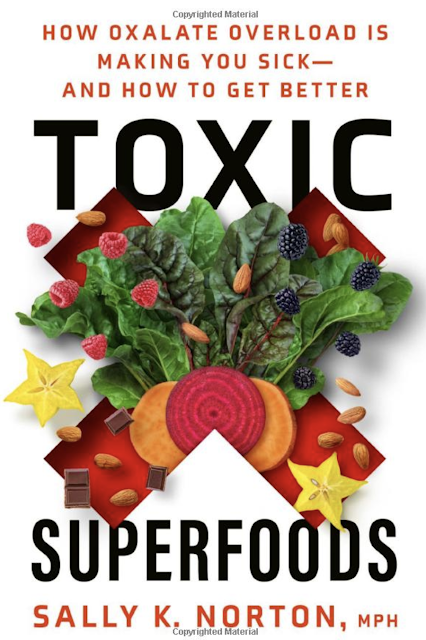
How High Oxalate Foods Wreck Your Health - Sally Norton

Image
If you’re eating a healthy diet and you’re still dealing with fatigue, inflammation, anxiety, recurrent injuries, or chronic pain, the problem could be your spinach, almonds, sweet potatoes, and other trusted plant foods. And your key to vibrant health may be quitting these so-called superfoods!? In this interview, Sally Norton, author of “ Toxic Superfoods: How Oxalate Overload Is Making You Sick — and How to Get Better ,” reviews how and why even foods we’ve been told are healthy can wreak havoc on your health. As the title of the book implies, the main culprit in question is oxalate or oxalic acid, found in many plants, beans, grains, seeds and nuts, fruits, berries and herbs. ( R ) So, just what are oxalates, why are they so bad, and how are they hidden in these superfoods that so many people are consuming? In short, it’s a naturally-occurring toxic, corrosive acid. In that state, it’s called oxalic acid. When the oxalic acid has minerals attached to it, it’s called oxalate. Chemi...

Labels

Show more

Archive

Show more