Posts

Showing posts from June, 2024

Fenbendazole Review by Dr David Gorski: Fenbendazole is fast becoming the laetrile of the 2020s

Image
Let’s start with the article that caught my attention over the weekend,  Triple-Negative Breast Cancer Eradicated by Fenbendazole , in which 2SGitW brags, “Fenbendazole kills the cancer cells responsible for killing cancer patients.” As I learned, it’s a followup to a  cancer cure testimonial published a week earlier  on the Substack in which 2SGitW massively exaggerated the the significance of some promising preclinical and lab studies suggesting that fenbendazole might have anticancer activity against triple-negative breast cancer written by someone going under the ‘nym of  BenFen , who claims to be a “retired University scientist who happened across fenbendazole when a loved one developed terminal cancer” and runs a  Substack  that publishes cancer cure testimonials due to fenbendazole. More interestingly, it turns out that fenbendazole repurposing has been a favorite “alternative cancer cure” since at least 2017, if not earlier, but the rise of ivermect...
Secretome vs Exosome: What's the Difference?

Image
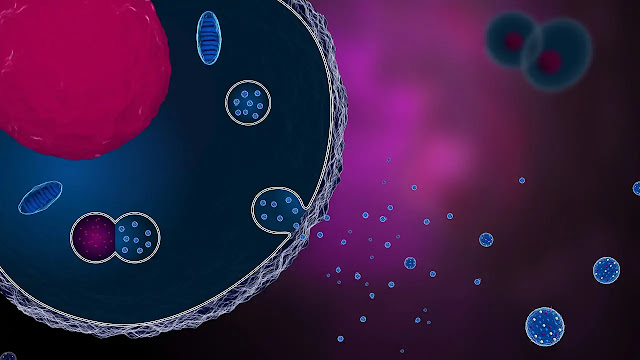
In scientific terms, the secretome is the totality of all substances released by stem cells to the outside. These include micro-vesicles, exosomes, proteins, cytokines (cell messengers), hormone-like substances and so-called immunomodulatory substances. Based on current science, it is believed that the effect of stem cells in clinical trials conducted to date is not from the cells as such, but via the vesicles, protein molecules and other substances such as cytokines released by the cells. These substances released to the outside are called "the secretome" as an umbrella term, because the release is called secretion. Which substances of the secretome trigger the actual effects is still largely unknown. What is a Secretome? Stem cells communicate with other cells by releasing messenger substances to the outside. The totality of all released substances is called secretome (from secretion = release to the outside). The secretome can contain exosomes, micro-vesicles, proteins, gr...

Xylitol Tied to Increased Risk of Heart Attack, Stroke: Cleveland Clinic Study

High amounts of xylitol, a popular sugar substitute, can increase the risk of heart attack, stroke, and other cardiovascular diseases, according to a new study by the Cleveland Clinic. The study , published in the European Heart Journal, focused on xylitol’s health effects. Xylitol is a natural sugar alcohol that looks and tastes like sugar but has fewer calories. Unlike regular sugar, it doesn’t raise blood sugar levels, so diabetic patients are often advised to use it for sugar replacement. Xylitol is naturally present in trace amounts in many fruits and vegetables, such as plums, strawberries, cauliflower, and pumpkin. It is often used in dental hygiene products, such as toothpaste, to reduce the risk of dental cavities and is generally thought to have a good safety profile. However, larger quantities of xylitol replace sugar in sugar-free candy, gums, and baked goods. “This study again shows the immediate need for investigating sugar alcohols and artificial sweeteners, especially...

Labels

Show more