Posts

Showing posts with the label aspartame

Artificial Sweeteners and Heart Disease (2026): What the Latest Science Actually Shows

Image
Do artificial sweeteners increase your risk of heart disease—or is this another case of media hype built on early-stage science? A recent article from The Epoch Times claims that a “popular artificial sweetener may impact heart health,” citing new research linking Aspartame to insulin spikes and atherosclerosis. It sounds alarming. But when you dig into the science, the reality is far more nuanced—and far more interesting. This evidence-based deep dive separates signal from noise , reviewing: The latest mechanistic studies Human clinical and observational data Confounding factors most articles ignore. What actually matters for your long-term cardiovascular risk. Quick Verdict (Executive Summary) ✔️ New research shows aspartame may trigger insulin and inflammation in mice ⚠️ There is no direct proof this causes heart disease in humans ⚖️ Human studies show weak associations—but not causation 🧠 The biggest risk is likely diet context, not the sweetener itself 👉 Bottom line: Artificia...
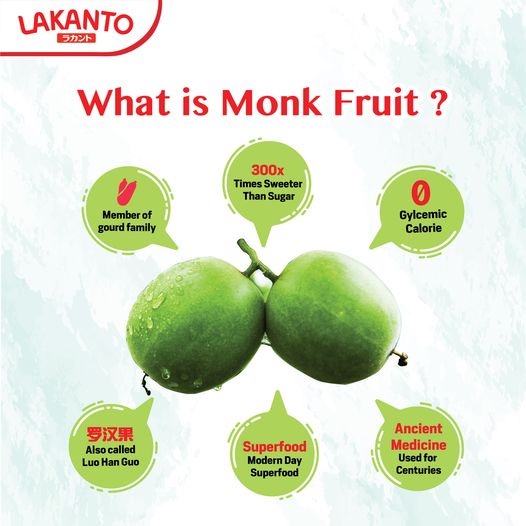
Can Monk Fruit Combat COVID, Diabetes, and Cancer?

Image
Following in stevia ’s footsteps, monk fruit has gained widespread attention as a natural sweetener. One significant benefit of this sweetener is that it can manage blood sugar and lipid levels. It also might have antiviral effects against COVID-19 and even anti-cancer properties. Monk fruit is also known as luo han guo, and its fruit resembles a small melon on the outside. Ancient Chinese people have used it for centuries as a natural sweetener and traditional medicine . According to a review article in Frontiers in Pharmacology, monk fruit contains  various nutritious compounds , including mogrosides, vitamin C, trace elements, linolenic acid, and other unsaturated fatty acids. “Monk fruit does actually contain natural sugars. Those are mainly fructose and glucose. However, unlike most fruit, the natural sugars from monk fruit aren’t really responsible for the sweetness. Instead, the intense sweetness comes from a group of compounds called mogrosides,” Taylor Wallace, an adjunct ...

Why FDA-Approved Food Can Be Poison?

Foods that are approved by the U.S. Food and Drug Administration are passed off as the gold-standard or, at the very least, safe. Meanwhile, the Academy of Nutrition and Dietetics (AND), which claims to be “your source for science-based food and nutrition information,” 1  is deemed the “authority” on food policy and the development of U.S. dietary guidelines. But if you rely on FDA and AND seals of approval to guide your food choices, you’re likely to be led astray. Both entities — and other preeminent public health organizations — represent textbook cases of corporate capture. Beholden to industry, they’re unable to represent the best interests of the American, and global, public. Just look at what happened with aspartame. WHO Sends Mixed Messages About Aspartame In May 2023, the World Health Organization released a new guideline advising not to use non-sugar sweeteners (NSS), i.e., artificial sweeteners, for weight control because they don’t offer any long-term benefit in reducin...

Aspartame Officially Declared a Carcinogen: WHO

Image
The World Health Organization has finally gotten around to declaring the popular artificial sweetener aspartame a potential carcinogen. 1  Dr Mercola warned about aspartame’s cancer-causing potential on his site over 25 years ago, in his best-selling book, “Sweet Deception: Why Splenda, NutraSweet, and the FDA May Be Hazardous to Your Health,” in 2006, and in an article he wrote for The Huffington Post. 2  It’s since been deleted — but you can see just how long this danger has been known. The ruling comes from sources with WHO’s International Agency for Research on Cancer (IARC), who said aspartame will be listed as “possibly carcinogenic to humans” in July 2023. 3  Additional findings from the Joint WHO and Food and Agriculture Organization's Expert Committee on Food Additives (JECFA), which is in the process of updating its aspartame risk assessment, are also expected. 4 Aspartame’s Cancer Link Known for Decades Despite aspartame’s approval, by 1987 a series of investig...

Labels

Show more

Archive

Show more