The Remarkable History and Safety of DMSO: 2026 Review
Introduction: The Forgotten Side of Medicine
Dimethyl sulfoxide (DMSO) is a simple chemical compound that has demonstrated remarkable efficacy in treating a wide variety of challenging health conditions. Upon its initial discovery, DMSO rapidly gained traction across the United States, backed by compelling clinical data and overwhelming public support.
Despite heavy investments from pharmaceutical companies, endorsements from professional athletes, and over 10,000 articles on its biological implications and 30,000 articles on its chemistry in the scientific literature over the past 40 years, DMSO remains largely unknown to the general public today. Due to historical political friction and regulatory hurdles spanning decades, it was sidelined and frequently mischaracterized as dangerous.
However, an objective review of the toxicity data reveals that DMSO is one of the safest therapeutic substances in existence. Today, it is FDA-approved for specific human applications (such as interstitial cystitis) and widely approved for veterinary use.
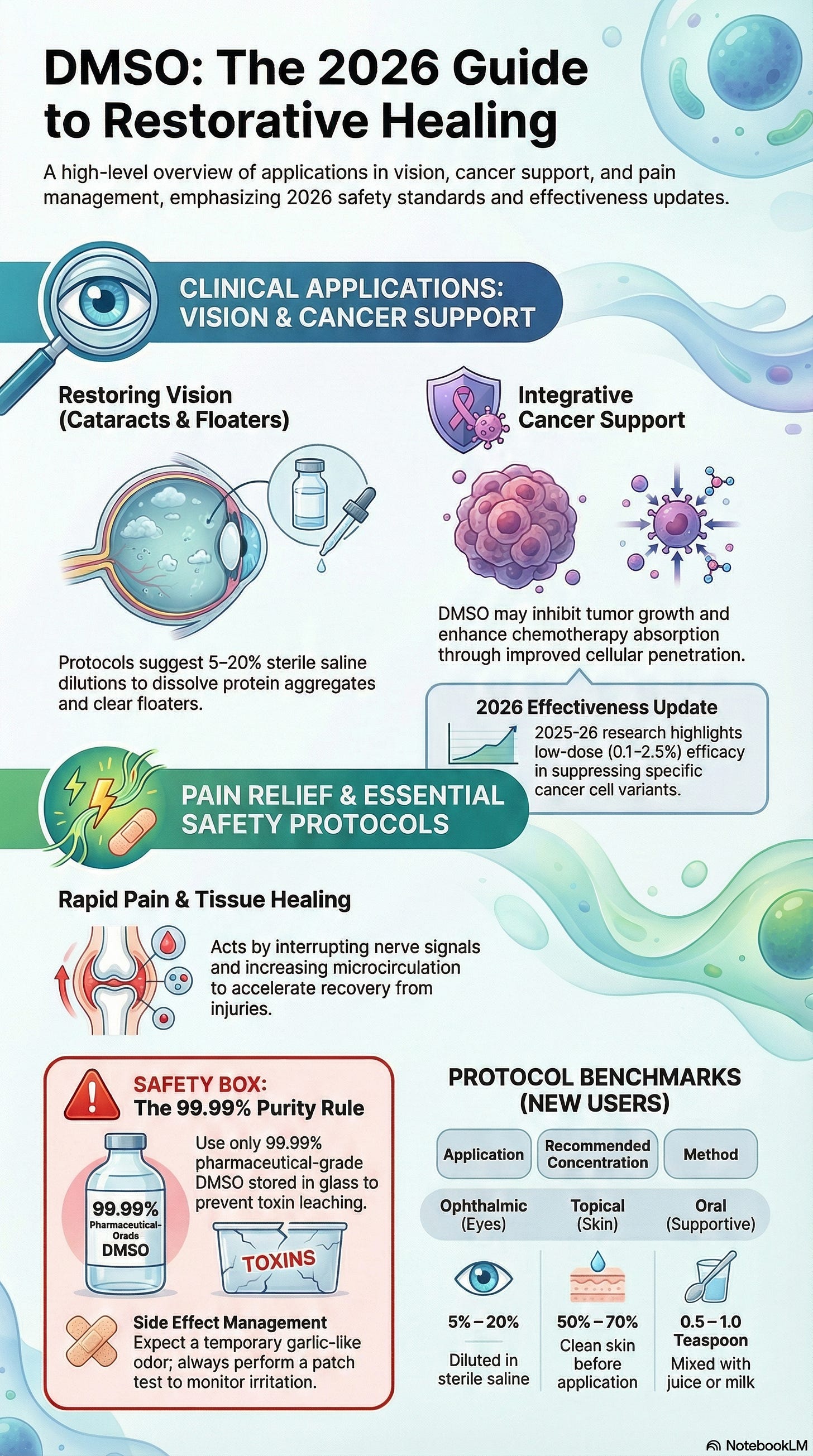
The Safety Profile of DMSO
For decades, regulatory agencies argued against the widespread use of DMSO, citing safety concerns. Yet, extensive pharmacological data and decades of clinical use paint a different picture. DMSO is uniquely capable of penetrating biological membranes without damaging them, often acting as an effective "vehicle" for other pharmaceutical products. When used appropriately, its toxicity profile is exceptionally low, and adverse effects are generally mild and localized.
Therapeutic Applications: Disorders Organised by Category
Based on extensive clinical reports, historical data, and thousands of patient testimonials, DMSO has shown an 80-90% success rate in managing and treating the following conditions. For easier reading and clinical reference, these conditions have been categorized by physiological system:
Neurological & Cognitive Health
- Ischemic and Hemorrhagic Strokes: Used to minimize tissue damage and reduce intracranial pressure following acute events.
- Spinal Cord Injuries: Applied to prevent paralysis and mitigate trauma to the central nervous system.
- Dementia & Cognitive Decline: Explored for its neuroprotective properties and ability to improve cerebral blood flow.
- Down Syndrome: Historically investigated for its potential to support metabolic and cognitive function.
Musculoskeletal & Pain Management
- Chronic Pain: Highly effective for patients suffering from decades of intractable pain from various etiologies.
- Acute Injuries & Trauma: Rapidly reduces swelling and pain in sports injuries, bruises, and physical impacts.
- Chronic Musculoskeletal Issues: Utilized for chronic spine and shoulder conditions.
- Rheumatic Conditions: Provides significant symptomatic relief for various forms of arthritis and joint inflammation.
Circulatory & Cardiovascular Disorders
- Raynaud’s Phenomenon: Helps improve peripheral blood flow and reduce vasospastic attacks.
- Varicose Veins: Applied topically to improve circulation and reduce venous pooling.
Dermatological & Wound Healing
- Severe Wounds: Accelerates the healing of surgical incisions and trauma wounds.
- Burns: Reduces tissue damage, pain, and scarring when applied to burn injuries.
- Collagen Disorders: Shows utility in managing debilitating conditions affecting connective tissue.
Sensory & Organ-Specific Conditions
- Ophthalmologic Issues: Investigated for degenerative eye conditions, including macular degeneration.
- Auditory Issues: Used in the management of tinnitus.
- Dental & Gastrointestinal Conditions: Applied for localized inflammation and tissue healing.
- Urological Disorders: FDA-approved specifically for the treatment of Interstitial Cystitis.
Systemic & Complex Autoimmune Diseases
- Complex Protein Disorders: Demonstrates efficacy in conditions like amyloidosis by interacting with abnormal protein deposits.
- Autoimmune Conditions: Helps modulate inflammatory responses in various autoimmune diseases.
- Oncology & Infections: Explored for its utility as an adjunct in treating cancer and challenging, treatment-resistant infections.
Conclusion
The historical suppression of DMSO highlights a significant disconnect between empirical efficacy and clinical adoption. By re-examining the vast body of scientific literature and the overwhelming number of positive clinical outcomes, it becomes clear that DMSO represents a highly versatile, remarkably safe, and profoundly effective therapeutic tool. As interest in foundational, metabolic, and longevity-focused protocols continues to grow, understanding the true mechanisms and safety of DMSO is more relevant than ever.
Disclaimer: This content is for informational and educational purposes only and does not constitute medical advice. Always consult with a qualified healthcare professional before beginning any new treatment protocol, especially regarding the sourcing and proper dilution of DMSO.
Sources and Further Reading
Primary Source for This Review
- A Midwestern Doctor - The Remarkable History and Safety of DMSO (October 2024)

.png)


Comments
Post a Comment