The 7-Layer Metabolic Oncology Framework 2026: Integrating Tumor Metabolism, Standard Cancer Treatment, Immunity, Nutrition and Lifestyle
Abstract
Background: Cancer is not solely a genetic disease. Malignant cells can undergo profound changes in glucose metabolism, mitochondrial function, amino-acid utilization, lipid metabolism, redox biology and interactions with the immune microenvironment. These changes can influence tumor growth, treatment response and resistance. This has generated increasing interest in metabolic oncology.
Objective: This review updates the OneDayMD seven-layer metabolic cancer framework and evaluates its major components according to the strength of available evidence. The framework integrates metabolic health, nutrition, standard tumor-directed therapy, investigational repurposed drugs, mitochondrial biology, cancer stem-cell biology, immune metabolism and lifestyle medicine.
Methods: Evidence was synthesized from systematic reviews, meta-analyses, randomized clinical trials, clinical guidelines, authoritative cancer resources and selected mechanistic studies. Interventions were classified according to whether they have established clinical utility, supportive/adjunctive evidence, or remain investigational.
Results: Cancer metabolism is biologically important, but metabolic vulnerabilities vary substantially between tumors and patients. Dietary interventions, including ketogenic diets, can modify glucose, triglycerides, body composition and other metabolic parameters, but evidence that they independently improve cancer survival or tumor control remains insufficient for routine use as anticancer therapy. Physical activity and preservation of lean body mass have stronger supportive evidence for overall cancer care. Standard cancer treatment remains the foundation of disease control. Metformin and repurposed antiparasitic drugs have compelling laboratory mechanisms in some cancer models but have not established broad anticancer efficacy in randomized clinical trials.
Conclusion: The seven-layer model is best regarded as a systems-oncology research framework, not a proven cancer protocol. The most defensible implementation is to optimize metabolic health, nutrition, physical function and supportive care while maintaining evidence-based cancer treatment. Investigational metabolic and repurposed-drug strategies should be studied within appropriately designed clinical trials or discussed with an oncology team rather than substituted for standard therapy.
Table of Contents
- Introduction
- Methods and Evidence Framework
- Why Cancer Metabolism Matters
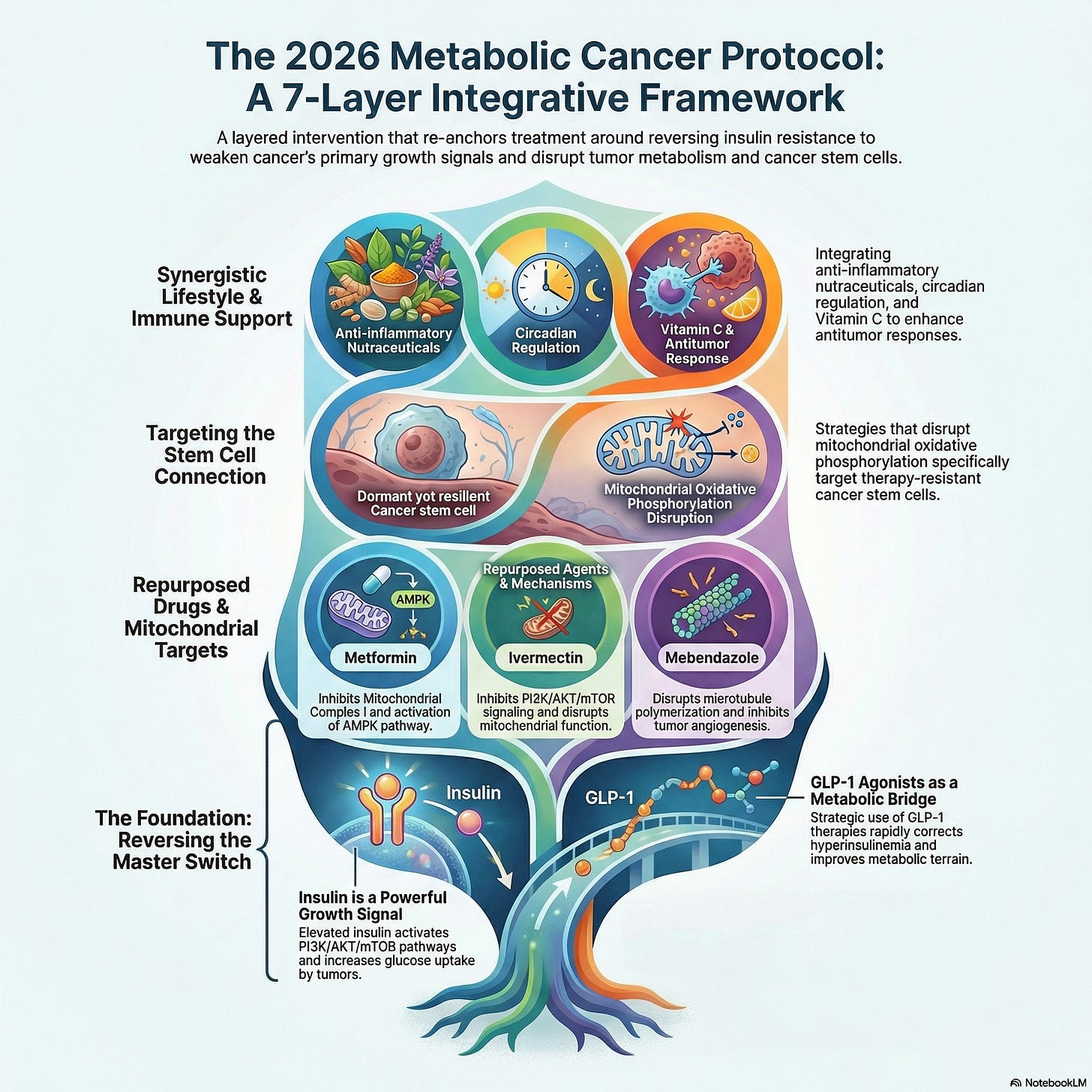
- The Updated Seven-Layer Framework
- Metabolic Health Foundation
- Layer 1: Nutrition and Metabolic Dietary Interventions
- Layer 2: Standard Tumor-Directed Cancer Treatment
- Layer 3: Repurposed Drugs and Nutraceuticals
- Layer 4: Mitochondrial and Cellular Metabolism
- Layer 5: Cancer Stem Cells and Treatment Resistance
- Layer 6: Immune Metabolism and the Tumor Microenvironment
- Layer 7: Exercise, Sleep, Body Composition and Lifestyle
- GLP-1 Drugs and Cancer: Where Do They Fit?
- A Safer Clinical Implementation Model
- Evidence Strength and Limitations
- Discussion
- Future Research
- Frequently Asked Questions
- Conclusion
- Selected References
1. Introduction
Cancer is often described as a genetic disease, but modern oncology increasingly recognizes that malignant cells operate within a complex biological ecosystem.
Mutations and epigenetic alterations can change signaling pathways, while the tumor microenvironment influences nutrient availability, oxygenation, immune activity and metabolic competition. Cancer cells can alter their use of glucose, glutamine, fatty acids and other substrates according to tissue type, genetic background and environmental conditions.

The classic Warburg effect describes the tendency of many cancer cells to maintain high rates of glycolysis and lactate production despite the availability of oxygen. However, modern cancer metabolism is more nuanced than a simple statement that "cancer cells use sugar while normal cells use oxygen."
Many tumors retain substantial mitochondrial oxidative phosphorylation. Some tumors can switch between glycolysis, oxidative phosphorylation, fatty-acid oxidation and alternative nutrient sources. This metabolic plasticity is one reason why a single dietary or metabolic intervention is unlikely to work uniformly across all cancers.
Metabolism also interacts with:
- oncogenic signaling;
- mitochondrial function;
- redox balance;
- epigenetic regulation;
- angiogenesis;
- immune-cell function;
- cancer stem-cell biology;
- drug resistance;
- the tumor microenvironment.
These relationships provide the biological rationale for metabolic oncology.
The purpose of this article is therefore not to present a "cancer cure protocol." Instead, it develops a clinically cautious framework for understanding where metabolic interventions may fit alongside conventional oncology.
2. Methods and Evidence Framework
This article is an evidence-informed narrative review and conceptual systems-oncology framework rather than a formal systematic review or clinical practice guideline.
Priority was given to:
- systematic reviews and meta-analyses;
- randomized controlled trials;
- prospective human studies;
- clinical practice guidelines;
- National Cancer Institute and other authoritative cancer resources;
- high-quality mechanistic studies;
- clinical trials evaluating metabolic interventions.
Laboratory and animal studies were considered useful for hypothesis generation but were not treated as proof of clinical efficacy.
Evidence hierarchy used in this framework
Tier 1 — Established clinical utility: interventions supported by strong clinical evidence and/or established oncology guidelines.
Tier 2 — Supportive/adjunctive evidence: interventions with meaningful human evidence for selected supportive, metabolic, functional or quality-of-life outcomes but without sufficient evidence to establish independent anticancer efficacy.
Tier 3 — Emerging clinical evidence: interventions supported by early clinical trials or limited human data requiring confirmation.
Tier 4 — Preclinical: laboratory or animal evidence suggesting a mechanism but insufficient evidence for routine clinical use.
Tier 5 — Anecdotal: case reports, testimonials or uncontrolled observations. These may generate hypotheses but cannot establish efficacy.
3. Why Cancer Metabolism Matters
Cancer metabolism is best understood as a network rather than a single pathway.
3.1 Glucose metabolism
Many tumors increase glucose uptake and glycolytic activity. Glycolysis provides ATP and metabolic intermediates needed for biosynthesis and proliferation.
However, glucose restriction alone does not necessarily starve a tumor. Tumors can access alternative fuels and can adapt their metabolism.
3.2 Mitochondrial metabolism
Mitochondria are involved in ATP production, biosynthesis, redox regulation, apoptosis and signaling. Contrary to simplified versions of the Warburg hypothesis, mitochondrial oxidative phosphorylation can remain important in many cancers.
3.3 Glutamine metabolism
Some tumors use glutamine as a major carbon and nitrogen source. Glutamine contributes to nucleotide synthesis, amino-acid metabolism and redox balance.
3.4 Lipid metabolism
Fatty-acid synthesis and fatty-acid oxidation can support membrane formation, energy production and signaling. These pathways may be particularly relevant in certain therapy-resistant tumor populations.
3.5 Lactate and the tumor microenvironment
Lactate is not simply a waste product. It can participate in metabolic exchange between cancer cells and stromal cells and may influence immune-cell function within the tumor microenvironment.
3.6 Metabolic plasticity
The most important concept for metabolic oncology may be metabolic plasticity.
When one metabolic pathway is inhibited, some cancer cells can increase reliance on another pathway. This creates both a challenge and an opportunity for combination therapy.
4. The Updated Seven-Layer Metabolic Oncology Framework
The original OneDayMD framework grouped metabolic interventions into seven layers. The updated model retains that structure but changes the clinical interpretation.
Foundation: Metabolic Health
Optimize glucose regulation, body composition, physical function, nutrition and cardiovascular-metabolic health when clinically appropriate.
Status: Strong general health rationale; cancer-control benefit varies by intervention and cancer type.
Layer 1 — Nutrition and Metabolic Dietary Interventions
Use evidence-based nutrition to preserve lean mass, support treatment tolerance and improve metabolic health. Ketogenic and fasting-based approaches remain investigational for cancer control.
Layer 2 — Standard Tumor-Directed Treatment
Surgery, radiation, chemotherapy, targeted therapy, hormonal therapy, immunotherapy and cellular therapies remain the principal evidence-based mechanisms for treating established cancer.
Layer 3 — Repurposed Drugs and Nutraceuticals
Investigate potentially useful agents such as metformin, ivermectin, mebendazole and selected nutraceuticals according to evidence level. Most remain investigational as anticancer agents.
Layer 4 — Mitochondrial and Cellular Metabolism
Study mitochondrial respiration, oxidative stress, AMPK, mTOR, redox pathways and metabolic dependencies as potential therapeutic vulnerabilities.
Layer 5 — Cancer Stem Cells and Treatment Resistance
Investigate tumor-cell populations capable of self-renewal, persistence and therapy resistance, while recognizing that cancer stem-cell biology is complex and tumor-specific.
Layer 6 — Immune Metabolism and the Tumor Microenvironment
Understand how glucose, lactate, amino acids, hypoxia and other metabolic factors influence T cells, natural killer cells, macrophages and other immune populations.
Layer 7 — Exercise, Sleep, Body Composition and Lifestyle
Optimize physical activity, muscle preservation, sleep, smoking cessation, alcohol reduction and other established health behaviors as part of comprehensive cancer care.
5. Metabolic Health Foundation
Metabolic health is an important foundation because obesity, insulin resistance, diabetes, physical inactivity and loss of muscle mass can influence cancer risk, treatment tolerance and overall health.
However, metabolic health should not be reduced to a single biomarker such as fasting insulin.
A clinically useful metabolic assessment may include:
- body weight and trajectory;
- waist circumference when appropriate;
- blood pressure;
- fasting glucose and HbA1c when indicated;
- lipid profile;
- physical activity;
- muscle strength and function;
- dietary adequacy;
- unintentional weight loss;
- nutritional status.
In cancer patients, preserving lean body mass can be more important than simply reducing body weight. Cancer-associated malnutrition and sarcopenia can adversely affect treatment tolerance and outcomes.
The National Cancer Institute notes that malnutrition is common among people with cancer and that inappropriate weight loss can include loss of muscle mass.
6. Layer 1: Nutrition and Metabolic Dietary Interventions
6.1 Whole-food dietary patterns
A cancer-supportive dietary strategy should prioritize nutritional adequacy rather than simply maximizing carbohydrate restriction.
Depending on the individual's cancer, treatment and nutritional status, a whole-food pattern may emphasize:
- vegetables and fruit;
- legumes when tolerated;
- nuts and seeds;
- minimally processed foods;
- adequate protein;
- healthy unsaturated fats;
- high-fiber foods when clinically appropriate;
- adequate hydration.
6.2 Ketogenic diets
Ketogenic diets have attracted considerable attention because they lower carbohydrate availability and increase ketone production.
Clinical studies and meta-analyses suggest that ketogenic diets can influence metabolic parameters such as body weight, glucose, triglycerides and body composition in some cancer populations.
A 2026 systematic review of systematic reviews and meta-analyses reported improvements in several metabolic and quality-of-life outcomes but also emphasized the need for stronger clinical evidence concerning cancer progression.
A 2025 systematic review and meta-analysis similarly reported metabolic and symptom-related effects but did not establish ketogenic diets as a replacement for conventional cancer treatment.
ASCO guidance has stated that evidence remains insufficient to recommend for or against ketogenic or low-carbohydrate diets specifically to improve cancer control, treatment toxicity or quality of life.
6.3 Fasting and fasting-mimicking diets
Fasting and fasting-mimicking diets are being investigated because nutrient restriction may alter insulin signaling, stress-response pathways and treatment sensitivity.
However, fasting during cancer therapy is not universally safe.
Potential concerns include:
- loss of muscle mass;
- inadequate calorie intake;
- dehydration;
- electrolyte disturbances;
- treatment-related weakness;
- worsening malnutrition.
Any medically supervised fasting intervention should therefore be individualized according to tumor type, treatment, nutritional status and comorbidities.
Read more: OneDayMD. I-PREVENT CANCER protocol: An Evidence-Based Guide to Cancer Prevention. (2026 Edition)7. Layer 2: Standard Tumor-Directed Cancer Treatment
This layer is the most important correction to the original framework.
Metabolic oncology should complement evidence-based cancer treatment, not replace it.
Depending on cancer type and molecular profile, tumor-directed treatment may include:
- surgery;
- radiation therapy;
- chemotherapy;
- targeted therapy;
- hormonal therapy;
- immune checkpoint inhibitors;
- antibody-drug conjugates;
- CAR-T or other cellular therapies;
- bispecific antibodies;
- clinical trials.
Precision oncology increasingly combines histology, genomic alterations, immune biomarkers, tumor burden, prior treatment exposure and mechanisms of resistance.
A metabolic framework should therefore be integrated with—not substituted for—precision oncology.
8. Layer 3: Repurposed Drugs and Nutraceuticals
Drug repurposing is attractive because existing medicines have known pharmacology and safety information. However, biological plausibility does not establish anticancer efficacy.
8.1 Metformin
Metformin has attracted substantial oncology interest because it can influence mitochondrial metabolism, AMPK signaling and systemic insulin-related pathways.
Observational studies have produced intriguing associations, but randomized evidence has been considerably less convincing.
A meta-analysis of 22 randomized trials involving 5,943 participants found no statistically significant overall improvement in progression-free or overall survival from metformin across cancer types.
Therefore, metformin should not be presented as a universally effective anticancer drug.
For patients who already have an appropriate medical indication for metformin, its metabolic effects may be relevant to overall health. Using it specifically as cancer treatment remains investigational.
8.2 Ivermectin
Ivermectin has demonstrated several potentially interesting anticancer mechanisms in laboratory models, including effects on signaling pathways, cellular stress and mitochondrial biology.
However, laboratory activity is not equivalent to demonstrated clinical efficacy.
At present, ivermectin should be classified as an investigational repurposed drug in oncology, not an established cancer treatment.
8.3 Mebendazole
Mebendazole has been investigated in laboratory and early clinical research because of effects on microtubules and other cellular pathways.
Evidence remains insufficient to establish mebendazole as an effective general-purpose cancer treatment.
8.4 Fenbendazole
Fenbendazole has generated considerable public interest following laboratory experiments and patient anecdotes.
However, fenbendazole is not an established human cancer treatment. Case reports and online testimonials cannot determine efficacy, optimal dose, safety or drug interactions.
8.5 Niclosamide and other repurposed agents
Niclosamide and numerous other established drugs have demonstrated anticancer activity in experimental systems. Their clinical value depends on whether sufficient drug concentrations can be achieved safely in humans and whether randomized trials demonstrate meaningful patient benefit.
8.6 Nutraceuticals
Compounds such as vitamin D, omega-3 fatty acids and curcumin have been investigated for effects on inflammation, immunity or metabolism.
These compounds may have legitimate nutritional or physiological roles, but they should not be described as substitutes for chemotherapy, immunotherapy, targeted therapy or radiation.
9. Layer 4: Mitochondrial and Cellular Metabolism
Mitochondria sit at the intersection of energy production, apoptosis, reactive oxygen species, biosynthesis and cellular signaling.
Some tumors rely heavily on oxidative phosphorylation, while others rely more strongly on glycolysis or display metabolic flexibility.
This suggests a future in which metabolic therapies are selected according to tumor-specific metabolic phenotypes rather than applied universally.
Potential research targets
- oxidative phosphorylation;
- mitochondrial complex activity;
- AMPK;
- mTOR;
- PI3K/AKT signaling;
- redox balance;
- glutamine metabolism;
- fatty-acid oxidation;
- lactate metabolism.
The challenge is therapeutic selectivity: normal cells also require these pathways.
Consequently, metabolic inhibition can produce toxicity if the therapeutic window is insufficient.
10. Layer 5: Cancer Stem Cells and Treatment Resistance
Cancer stem-cell research proposes that some tumor-cell populations possess enhanced self-renewal capacity and may contribute to recurrence, metastasis and treatment resistance.
These cells can exhibit distinctive metabolic characteristics, including altered mitochondrial activity, redox regulation and lipid metabolism.
However, cancer stem-cell biology is complex and varies between tumor types. The concept should not be interpreted as proof that one metabolic intervention can eliminate all cancer stem cells.
Why this matters for treatment resistance
Cancer recurrence can emerge through several mechanisms:
- pre-existing resistant clones;
- new mutations;
- epigenetic adaptation;
- drug-tolerant cell states;
- tumor microenvironment changes;
- immune escape;
- metabolic adaptation.
Metabolic plasticity may therefore be one component of resistance rather than a universal explanation for treatment failure.
11. Layer 6: Immune Metabolism and the Tumor Microenvironment
The immune system and cancer cells compete for nutrients and occupy a metabolically constrained microenvironment.
High lactate concentrations, hypoxia, abnormal glucose metabolism and altered amino-acid availability can affect immune-cell behavior.
These processes may influence:
- T-cell activity;
- natural killer cell function;
- macrophage polarization;
- dendritic-cell activity;
- immune checkpoint signaling;
- response to immunotherapy.
This is one reason why metabolic oncology and immuno-oncology are increasingly overlapping research fields.
Metabolism and checkpoint immunotherapy
Checkpoint inhibitors such as PD-1, PD-L1 and CTLA-4 inhibitors depend on an active antitumor immune response. The metabolic environment surrounding immune cells can influence whether those cells remain functional.
However, improving systemic metabolism does not automatically make a tumor "hot" or guarantee immunotherapy response.
Biomarkers such as PD-L1 expression, microsatellite instability, mismatch-repair status, tumor mutational burden and tumor-specific genomic alterations remain important components of treatment selection.
12. Layer 7: Exercise, Sleep, Body Composition and Lifestyle
Lifestyle medicine is arguably the least controversial part of the metabolic framework when it is used for supportive cancer care rather than presented as a stand-alone anticancer therapy.
12.1 Physical activity
Exercise can improve physical function, cardiovascular fitness, insulin sensitivity and quality of life.
Evidence concerning survival has also strengthened. A 2026 systematic review and meta-analysis of randomized controlled trials evaluated physical activity interventions and mortality outcomes in people with cancer, adding to the evidence base supporting exercise as an important component of comprehensive cancer care.
Exercise should be adapted to cancer type, treatment status, fatigue, bone involvement, cardiovascular status and physical capacity.
12.2 Muscle preservation
Maintaining skeletal muscle is particularly important during cancer treatment.
Patients should not pursue aggressive weight loss at the expense of muscle mass.
12.3 Sleep and circadian biology
Sleep and circadian rhythms influence hormonal, metabolic and immune systems. Optimizing sleep is therefore reasonable supportive care, although it should not be marketed as a direct cancer treatment.
12.4 Smoking and alcohol
Smoking cessation remains one of the most important modifiable cancer-risk interventions.
Alcohol reduction or avoidance is also relevant because alcohol is causally associated with several cancers.
13. GLP-1 Drugs and Cancer: Where Do They Fit?
GLP-1 receptor agonists and related incretin-based medicines have transformed the treatment of obesity and type 2 diabetes.
They can reduce appetite, body weight and blood glucose and may improve several aspects of metabolic health.
However, their role in oncology requires careful wording.
They may have relevance to oncology through treatment of obesity, diabetes and metabolic disease, but evidence concerning direct cancer treatment or cancer survival remains an active area of investigation.
Potential role within a metabolic oncology framework
- treatment of clinically indicated obesity;
- treatment of type 2 diabetes;
- improvement of glycemic control;
- reduction of cardiometabolic risk;
- potential influence on obesity-related cancer risk.
Important oncology considerations
Rapid weight loss can be problematic when a patient already has cancer-associated weight loss or sarcopenia.
Any GLP-1-based intervention should therefore consider:
- baseline nutritional status;
- lean body mass;
- appetite;
- protein intake;
- treatment-related nausea;
- hydration;
- drug interactions and contraindications;
- the patient's overall oncology treatment plan.
14. A Safer Clinical Implementation Model
The original "0–12 weeks / 3–6 months / 6+ months" protocol structure could be interpreted as a prescriptive cancer treatment regimen. A more scientifically defensible model is based on clinical priorities rather than fixed treatment cycles.
Phase A — Clinical and metabolic assessment
- Confirm the cancer diagnosis and stage.
- Review pathology and molecular biomarkers.
- Identify the standard-of-care treatment plan.
- Assess nutritional status.
- Assess unintended weight loss.
- Assess muscle mass and physical function.
- Review diabetes, obesity and cardiovascular risk.
- Identify potential drug interactions.
Phase B — Establish the evidence-based foundation
- Begin or continue indicated cancer treatment.
- Correct nutritional deficiencies when clinically appropriate.
- Maintain adequate protein and calorie intake.
- Preserve muscle and physical function.
- Control clinically significant diabetes or metabolic disease.
- Stop smoking.
- Reduce alcohol exposure.
- Address sleep and physical activity.
Phase C — Consider metabolic interventions
Depending on the patient, clinicians may consider dietary strategies or metabolic interventions for appropriate indications.
Investigational approaches should be identified explicitly as such.
Phase D — Monitor
Monitoring should focus on clinically meaningful outcomes rather than biomarkers alone.
Potential endpoints include:
- tumor response;
- progression-free survival;
- overall survival;
- treatment tolerance;
- quality of life;
- body composition;
- muscle strength;
- metabolic parameters;
- adverse events.
15. Evidence Strength and Major Limitations
What is relatively well supported?
- Nutrition assessment is important in cancer care.
- Malnutrition and muscle loss can adversely affect cancer patients.
- Physical activity can improve fitness and functional outcomes.
- Cancer cells frequently exhibit altered metabolism.
- Tumor metabolism can interact with immunity and treatment resistance.
- Metabolic health is relevant to cancer prevention and survivorship.
What remains uncertain?
- Whether ketogenic diets improve cancer survival broadly.
- Which cancers are most metabolically vulnerable.
- Which patients benefit from fasting or fasting-mimicking diets.
- Whether metformin improves cancer outcomes in specific populations.
- Whether ivermectin has clinically meaningful anticancer activity.
- Whether mebendazole has clinically meaningful anticancer activity.
- Whether fenbendazole has anticancer efficacy in humans.
- Whether GLP-1 medicines directly influence cancer progression.
- Which combinations of metabolic therapies are safe and effective.
Why preclinical evidence can be misleading
A drug can kill cancer cells in a laboratory dish but fail clinically because:
- the required concentration cannot safely be achieved in humans;
- the drug does not reach the tumor sufficiently;
- the tumor adapts through another pathway;
- normal tissues are also damaged;
- the cancer is biologically heterogeneous;
- the laboratory model does not reproduce the human tumor microenvironment.
16. Discussion
The major strength of the seven-layer framework is that it recognizes cancer as a network rather than a single pathway.
The major weakness is that a systems framework can easily become a collection of plausible mechanisms without demonstrating that the combined intervention improves patient outcomes.
This distinction is critical.
Metabolic oncology is scientifically compelling because tumors clearly exhibit metabolic abnormalities. But the existence of metabolic abnormalities does not mean that aggressively manipulating systemic metabolism will necessarily damage the tumor more than the patient.
The future of metabolic oncology is therefore unlikely to be a universal "cancer diet."
Instead, the field is moving toward precision metabolic oncology.
Precision metabolic oncology may eventually incorporate:
- tumor genomic profiling;
- metabolomic profiling;
- imaging of tumor metabolism;
- insulin and glucose physiology;
- body composition;
- immune profiling;
- microbiome characteristics;
- drug-response testing;
- AI-assisted treatment modeling.
The objective would be to identify the metabolic dependencies that actually matter for an individual tumor.
17. Future Research Priorities
Several research questions deserve priority.
1. Biomarker-driven metabolic trials
Instead of enrolling all cancer types, trials should identify tumors with specific metabolic vulnerabilities.
2. Combination therapy
Metabolic therapies may ultimately work best in combination with targeted therapy, chemotherapy, radiation or immunotherapy.
3. Treatment resistance
Future studies should examine whether metabolic interventions can delay or reverse acquired resistance.
4. Body-composition endpoints
Trials should measure muscle mass, fat mass and physical function rather than relying only on body weight.
5. Patient safety
Trials must determine whether aggressive carbohydrate restriction, fasting or metabolic drugs increase toxicity during cancer treatment.
6. GLP-1 oncology research
Prospective studies are needed to determine whether treating obesity and metabolic disease with GLP-1-based therapies affects cancer incidence, recurrence, treatment tolerance or survival.
7. Repurposed-drug randomized trials
Agents such as ivermectin, mebendazole, fenbendazole and metformin should not be judged primarily by testimonials or laboratory studies. Their clinical value requires appropriately powered human trials.
18. Frequently Asked Questions
Is the 7-Layer Metabolic Cancer Framework a proven cancer treatment?
No. It is a conceptual systems-oncology framework that integrates established cancer care with metabolic, nutritional, lifestyle and investigational strategies.
Can metabolic therapy replace chemotherapy?
No. There is currently insufficient evidence to support replacing established cancer treatment with metabolic therapy.
Does sugar feed cancer?
Cancer cells commonly consume glucose, but the statement "sugar feeds cancer" is an oversimplification. The human body maintains blood glucose even when dietary carbohydrate is severely restricted, and tumors can use multiple metabolic substrates.
Can a ketogenic diet cure cancer?
No clinical evidence currently establishes a ketogenic diet as a stand-alone cure for cancer. Research suggests that ketogenic diets can alter metabolic parameters, but evidence for cancer control remains insufficient.
Can fasting kill cancer cells?
Fasting can produce metabolic changes that are being investigated in oncology, but there is insufficient evidence that fasting alone selectively kills cancer cells in patients. Prolonged fasting may also be harmful in people with malnutrition or cancer-associated weight loss.
Is metformin an anticancer drug?
Metformin has important metabolic and experimental anticancer mechanisms, but randomized clinical evidence has not established a broad survival benefit across cancers.
Is ivermectin a cancer treatment?
Ivermectin has interesting preclinical anticancer mechanisms, but it is not an established cancer treatment and requires clinical trials to determine whether laboratory findings translate into meaningful patient benefit.
Is mebendazole a cancer treatment?
Mebendazole remains investigational in oncology. Laboratory findings and individual reports are not sufficient to establish efficacy.
Is fenbendazole proven to treat cancer?
No. Fenbendazole is not an established human cancer treatment. Patient testimonials and case reports cannot substitute for randomized clinical evidence.
Can GLP-1 drugs treat cancer?
GLP-1 medicines are established treatments for conditions such as obesity and type 2 diabetes, not established cancer therapies. Their potential relationship with cancer incidence and outcomes is an active area of research.
What is the strongest part of metabolic oncology today?
The strongest clinical case is not for a single "metabolic cancer drug." It is for comprehensive management of nutrition, physical function, metabolic disease, body composition and lifestyle alongside appropriate cancer treatment.
19. Conclusion
The seven-layer metabolic oncology framework provides a useful way to organize the increasingly complex relationship between cancer metabolism, treatment resistance, immunity, nutrition and systemic health.
However, the framework should be understood as a research and clinical-discussion model rather than a validated cancer protocol.
The strongest evidence supports maintaining nutritional adequacy, preserving muscle, improving physical function, treating clinically important metabolic disease and delivering appropriate cancer-directed therapy.
Ketogenic diets, fasting, metformin, ivermectin, mebendazole, fenbendazole, nutraceutical combinations and other metabolic interventions remain at different stages of investigation.
The future is unlikely to be "metabolic therapy versus conventional oncology."
The more promising direction is:
Precision oncology + metabolic health + immune biology + tumor microenvironment + lifestyle medicine + carefully selected clinical trials.
In other words, the goal is not to find one universal metabolic weakness in cancer. The goal is to identify the vulnerabilities of a particular tumor and determine whether they can be exploited safely without compromising the patient's overall health or established treatment.
20. References
🔬 Core Cancer Metabolism & Warburg Effect
These are foundational and highly cited.
-
Warburg O. On the origin of cancer cells. Science. 1956.
-
Vander Heiden MG et al. Understanding the Warburg effect. Science. 2009.
-
Liberti MV, Locasale JW. The Warburg Effect. Trends Biochem Sci. 2016.
-
Pavlova NN, Thompson CB. The emerging hallmarks of cancer metabolism. Cell Metab. 2016.
-
DeBerardinis RJ, Chandel NS. Fundamentals of cancer metabolism. Sci Adv. 2016.
-
Boroughs LK, DeBerardinis RJ. Metabolic pathways promoting cancer cell survival. Nat Cell Biol. 2015.
🔬 Glucose Metabolism in Cancer
-
Gatenby RA, Gillies RJ. Why do cancers have high aerobic glycolysis? Nat Rev Cancer. 2004.
-
Pelicano H et al. Glycolysis inhibition for anticancer treatment. Oncogene. 2006.
-
Hsu PP, Sabatini DM. Cancer cell metabolism. Cell. 2008.
-
Dang CV. MYC and cancer metabolism. Cancer Res. 2010.
🔬 Glutamine Metabolism
-
DeBerardinis RJ et al. Beyond aerobic glycolysis: transformed cells can engage glutamine metabolism. Cell Metab. 2007.
-
Wise DR, Thompson CB. Glutamine addiction. Trends Biochem Sci. 2010.
-
Altman BJ et al. From Krebs to clinic: glutamine metabolism in cancer. Nat Rev Cancer. 2016.
-
Jin L et al. Targeting glutamine metabolism in cancer. Oncogene. 2016.
👉 Strongest evidence pillar for “dual fuel” argument.
🔬 Ketogenic Diet & Cancer (Human + Reviews)
-
Schmidt M et al. Effects of a ketogenic diet on quality of life in advanced cancer. Nutr Metab. 2011.
-
Fine EJ et al. Targeting insulin inhibition as metabolic therapy in advanced cancer. J Clin Oncol. 2012.
-
Champ CE et al. Targeting metabolism with ketogenic diet. Cancer Metab. 2014.
-
Klement RJ. Beneficial effects of ketogenic diets for cancer patients. Med Oncol. 2017.
-
Weber DD et al. Ketogenic diet in cancer therapy. Mol Metab. 2020.
-
Römer M et al. Ketogenic diets in cancer: systematic review. Clin Exp Med. 2021
👉 Adjunctive, not definitive therapy
🔬 Fasting & Metabolic Therapy
-
Safdie FM et al. Fasting and chemotherapy. Cancer Res. 2009.
-
Lee C et al. Fasting cycles retard tumor growth. Sci Transl Med. 2012.
-
Longo VD, Mattson MP. Fasting: molecular mechanisms. Cell Metab. 2014.
-
de Cabo R, Mattson MP. Effects of intermittent fasting. N Engl J Med. 2019.
-
Brandhorst S et al. Fasting-mimicking diet and cancer. Cell Metab. 2015.
🔬 Obesity, Insulin & Cancer
-
Calle EE, Kaaks R. Overweight, obesity and cancer. Nat Rev Cancer. 2004.
-
Pollak M. Insulin and insulin-like growth factor signalling in cancer. Nat Rev Cancer. 2008.
-
Giovannucci E et al. Diabetes and cancer. JAMA. 2010.
-
Gallagher EJ, LeRoith D. Insulin and cancer. Endocr Rev. 2015.
🔬 Ivermectin
-
(PubMed)
Antitumor effects of ivermectin at clinically feasible concentrations.
→ Demonstrates anti-tumor activity across multiple cancer cell lines -
(PubMed)
Ivermectin inhibits colorectal cancer cell growth
→ Shows ROS-mediated apoptosis and cell cycle arrest -
(PubMed)
Ivermectin reduces tumor development in rat colon cancer model -
(PubMed)
Ivermectin enhances anticancer effects in breast cancer mouse model -
(PubMed)
2025 review: Ivermectin in cancer treatment
→ Key conclusion:
-
Strong preclinical evidence
-
No large human RCTs yet
-
(PubMed)
Review of ivermectin anticancer mechanisms
→ Wnt/β-catenin, PI3K/Akt/mTOR pathways
👉 Promising preclinical agent, not clinically validated therapy in large controlled trial.
🔬 Mebendazole
These are well-established repurposing studies:
-
Nygren P, Larsson R. Drug repositioning: mebendazole. Acta Oncol. 2014
-
Bai RY et al. Mebendazole as anticancer agent. Neuro Oncol. 2011
-
Doudican NA et al. Mebendazole induces apoptosis. J Invest Dermatol. 2008
-
Mukhopadhyay T et al. Mebendazole anticancer activity. Mol Cancer Ther. 2002
👉 These are among the most consistently cited MBZ papers
🔬 Mitochondria & Cancer
-
Wallace DC. Mitochondria and cancer. Nat Rev Cancer. 2012
-
Vyas S et al. Mitochondria in cancer metabolism. Cell. 2016
-
Martinez-Reyes I, Chandel NS. Cancer metabolism overview. Nat Rev Cancer. 2021
🔬 Combination Metabolic Strategies
-
Zhou W et al. Ketogenic diet enhances therapy. PLoS One. 2007
-
Poff AM et al. KD + hyperbaric oxygen therapy. PLoS One. 2013
-
Allen BG et al. KD + radiation therapy. Int J Radiat Oncol Biol Phys. 2013
- Targeting the Mitochondrial-Stem Cell Connection in Cancer Treatment: A Hybrid Orthomolecular Protocol. 2024
- Justus Hope. The RESET-5 protocol (Sulforaphane, Aged Garlic Extract, Mebendazole, Ivermectin, Metformin) is a comprehensive, multi-targeted approach designed to eradicate cancer stem cells (CSCs), reverse chemo-resistance, and restore immune competence. Substack. 2026
- Thomas Seyfried Cancer Treatment Protocol: Ketogenic Diet That Starves Cancer - A Comprehensive Guide. OneDayMD. 2026
1. Kamali M, et al. The Effect of a Ketogenic Diet on Cancer: Evidence From Systematic Reviews and Meta-Analyses. Integrative Cancer Therapies. 2026.
2. Zhang M, Zhang Q, Huang S, Lu Y, Peng M. Impact of ketogenic diets on cancer patient outcomes: a systematic review and meta-analysis. Frontiers in Nutrition. 2025.
3. Klement RJ, et al. Ketogenic diets in medical oncology: a systematic review with focus on clinical outcomes. Medical Oncology. 2020.
4. American Society of Clinical Oncology. Exercise, Diet, and Weight Management During Cancer Treatment: ASCO Guideline.
5. National Cancer Institute. Nutrition in Cancer Care. PDQ Health Professional Version.
6. McKerill E, et al. Efficacy of ketogenic metabolic therapy as an adjuvant to the current standard of care in the treatment of glioblastoma: a systematic review of clinical trials. Medical Oncology. 2025.
7. Firdous J, et al. Efficacy and safety of ketogenic diet in glioblastoma: an updated systematic review and meta-analysis. Neurological Sciences. 2026.
8. Exercise and survival benefit in cancer patients: evidence from a comprehensive meta-analysis. 2025.
9. Physical activity reduces all-cause mortality in patients with cancer: a systematic review and meta-analysis of randomized controlled trials. Cancer Treatment Reviews. 2026.
10. Metformin randomized clinical trial evidence and systematic reviews evaluating cancer outcomes.
11. Hanahan D. Hallmarks of Cancer: New Dimensions. Cancer Discovery. 2022.
12. DeBerardinis RJ, Chandel NS. Fundamentals of cancer metabolism. Science Advances / related cancer metabolism literature.
13. Pavlova NN, Thompson CB. The Emerging Hallmarks of Cancer Metabolism. Cell Metabolism. 2016.
14. Liberti MV, Locasale JW. The Warburg Effect: How Does It Benefit Cancer Cells? Trends in Biochemical Sciences. 2016.
Medical and Editorial Disclaimer
This article is an educational review of metabolic oncology research. It is not medical advice and does not constitute a cancer treatment protocol, prescription or recommendation to use any drug off-label.
Experimental interventions discussed in this article—including ketogenic diets for cancer control, fasting, metformin for anticancer purposes, ivermectin, mebendazole, fenbendazole, niclosamide and other repurposed agents—should not be assumed to be effective cancer treatments unless supported by appropriate clinical evidence.
Patients with cancer should discuss dietary changes, supplements, fasting, exercise programs and any off-label or investigational medication with their oncologist and relevant healthcare professionals.
OneDayMD position: Standard evidence-based cancer treatment should remain the foundation of care. Metabolic oncology should be developed as a complementary research field and part of a multi-modal strategy, with the ultimate standard being improved patient outcomes demonstrated in well-designed clinical trials.
Last reviewed: August 2026. Evidence is evolving rapidly and individual treatment decisions require clinical assessment.

.png)


Comments
Post a Comment