Posts

The Real Reasons You’re Aging (2026 Research Review): An Evidence-Based Guide to Biological Aging Mechanisms

Image
Executive Overview Aging is not caused by time. It is caused by measurable biological processes that gradually reduce cellular repair capacity, metabolic flexibility, and tissue resilience. Research from institutions including National Institute on Aging and Harvard Medical School shows that aging is driven by interconnected molecular mechanisms — many of which are modifiable. The central principle: Aging accelerates when cellular damage exceeds cellular repair. This high-level guide synthesizes current geroscience research into a structured, clinically grounded framework. What Are the Real Reasons You’re Aging? Modern longevity research identifies multiple overlapping mechanisms. These are not isolated processes — they form a biological network. Below is a research-based breakdown of the core drivers. 1. Genomic Instability: DNA Damage Accumulation Every day, your cells experience thousands of DNA lesions from: Oxidative stress UV exposure Toxins Normal metabolism Young organisms repa...

The Pancreatic Cancer Paradox: How One Ancient Community Eliminated a Modern Killer

Image
Cancer’s Golden Age — Except for One Disease Cancer doctors have grown accustomed to good news. Over the past three decades: Lung cancer deaths have fallen by 40% Breast cancer mortality is down 44% Prostate cancer deaths have dropped by 50% Colon cancer , once a leading killer, now claims 50% fewer lives than in 1990 These victories represent billions in research funding, surgical innovation, targeted therapies, and nationwide screening campaigns — the full force of modern medicine’s war on cancer. Yet one malignancy refuses to follow the script . Pancreatic Cancer Awareness Pancreatic Cancer: The Cancer That Medicine Can’t Defeat Pancreatic cancer — the silent executioner hidden behind the stomach and wrapped around vital blood vessels — often progresses without symptoms until it is too late. Instead of declining, it is accelerating. Deaths surged 70% between 1999 and 2023 By 2030 , it is projected to become America’s second-leading cancer killer Five-year survival remains ~13% , ...

Best Supplements and Diet for Gut Health: Evidence-Based Guide for 2026

Image
Your gut isn’t just for digestion — it’s a metabolic and immune control center . Healthy gut function supports: Digestion and nutrient absorption Immune regulation Metabolic health and insulin sensitivity Mental and cognitive function via the gut-brain axis Optimizing gut health involves both diet and supplements, with a focus on promoting microbial diversity, butyrate production, and gut barrier integrity. 🧬 Key Principles for a Healthy Gut Diverse, fiber-rich diet fuels beneficial microbes Probiotics and prebiotics support microbiome balance Short-chain fatty acids (SCFAs), especially butyrate , nourish colon cells Lifestyle factors like sleep, hydration, and exercise enhance gut resilience 🥦 Best Diet for Gut Health 1. High-Fiber Foods Fiber is the primary fuel for beneficial gut bacteria and SCFA production. Whole grains: oats, barley, brown rice Legumes: lentils, chickpeas, beans Vegetables: broccoli, artichokes, asparagus, onions, garlic Fruits: apples, pears, berries Seeds:...

Selenium and Cancer: The Mineral That May Lower Your Risk (2026)

Image
What Is Selenium and Why Is It Important? Selenium is a  trace mineral  required in tiny amounts but vital for multiple biological functions: Antioxidant Defense:  Selenium is a key component of  glutathione peroxidases , enzymes that neutralize free radicals and protect cells from DNA damage, a major factor in cancer development. Immune System Support:  Selenium enhances immune cell activity, helping the body detect and destroy abnormal cells. Thyroid Hormone Regulation:  Selenium helps convert thyroid hormones to their active forms, which regulate metabolism and cellular growth. Could Selenium Protect Against Pancreatic Cancer? Pancreatic cancer remains one of the deadliest cancers worldwide, often diagnosed late with limited treatment options. Recent research suggests that selenium, a trace mineral essential for human health, may dramatically reduce the risk of pancreatic cancer. One study even reported a 95% lower risk in people with the highest seleniu...

Chemotherapy: Efficacy, Risks, and Ethical Considerations in Cancer Treatment (2025)

Image
Abstract Chemotherapy has been a cornerstone of cancer treatment for decades, yet its efficacy and safety continue to be subjects of debate. While chemotherapy has demonstrated effectiveness in specific cancer types, concerns regarding its side effects, long-term outcomes, and financial incentives within the pharmaceutical industry remain. This article reviews the scientific literature on chemotherapy's benefits and risks, explores potential conflicts of interest in oncology, and evaluates alternative treatment approaches. A balanced, evidence-based perspective is provided to inform clinical practice and patient decision-making. Introduction Cancer remains a leading cause of mortality worldwide, with chemotherapy being one of the most commonly used treatments. Introduced in the mid-20th century, chemotherapy involves the use of cytotoxic drugs to target rapidly dividing cancer cells. While some chemotherapy regimens have significantly improved survival rates, others have shown limi...

Melt Fat Naturally With Your Own GLP-1 Review: The Complete Guide to Natural GLP-1 Optimization (Without Ozempic)

Image
Summary Verdict Weight Loss Cure: Melt Fat Naturally With Your Own GLP-1  presents a biologically plausible and lifestyle-centered framework for improving metabolic health and potentially enhancing natural GLP-1 production. It is: A helpful metabolic strategy guide Not a pharmaceutical replacement Strong on lifestyle integration Moderate on evidence strength GLP-1 drugs like Ozempic, Wegovy, and Mounjaro have reshaped obesity treatment worldwide. But as demand surges, so do the questions: Is there a natural GLP-1 alternative? Can you increase GLP-1 without injections? Are gut-based strategies effective? Is natural activation strong enough to cause weight loss? In Weight Loss Cure: Melt Fat Naturally With Your Own GLP-1 , Joseph Mercola argues that repairing gut health and metabolic function can stimulate endogenous GLP-1 production — potentially reducing appetite and supporting fat loss without pharmaceuticals. This guide evaluates the book, the science, and whether natural GLP-1 a...

Castor Oil Before Bed: Miracle Detox, Lymphatic Flush, or Wellness Marketing? A Scientific Deep Dive (2026)

Image
Castor oil has become one of the most viral “ancient remedies” in modern wellness culture. Across YouTube , TikTok, and alternative health blogs, it is promoted as: A detoxification accelerator A lymphatic system activator A natural immune booster A deep sleep enhancer A collagen stimulator A hair regrowth solution A scar dissolver A gut reset tool A way to wake up with a flatter stomach overnight The claims are often framed in scientific language — referencing EP3 receptors, prostaglandins, lymphocytes, and molecular cascades. It sounds compelling. But how much of it is real — and how much is mechanistic storytelling layered onto traditional oil use? This article provides a rigorous, evidence-informed breakdown. Understanding the “Nighttime Redemption Cycle” Many castor oil videos begin with a powerful hook: Your body enters a biological cleaning window during deep sleep — and you can amplify it. This framing leverages something real. During deep sleep: The glymphatic system increase...

Acid Reflux: Duration of Stomach Acid Blocker Therapy Varies (2025)

Image
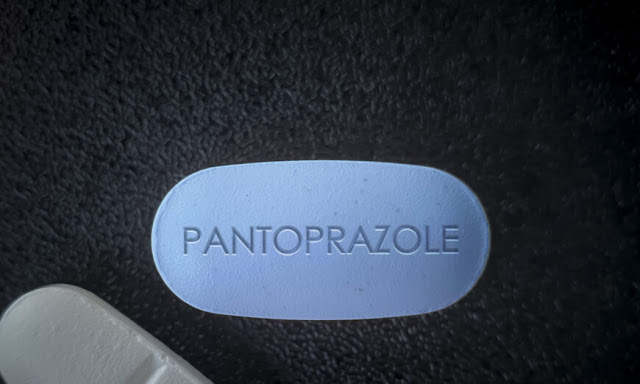
I have had acid reflux for many years. About six months ago, a doctor looked down my esophagus and into my stomach (a test he called an upper endoscopy) because the symptoms were getting worse. My esophagus was inflamed, and I was told to take pantoprazole indefinitely. But now I rarely have heartburn. Do I really need to stay on this medication forever? (Dreamstime/TNS) Answer: Pantoprazole is a proton pump inhibitor (PPI). Drugs in this class are the most potent stomach acid inhibitors. Other proton pump inhibitors include omeprazole, esomeprazole, lansoprazole, dexlansoprazole, and rabeprazole. There is no simple yes or no answer to your question, but here is how I approach this very common situation. My recommendation depends on some details about your reflux symptoms that I don’t have. Was the heartburn present for a long time before you had the endoscopy? Did you start the pantoprazole many weeks before the endoscopy last year? The reason for these questions is to get a better pi...

Labels

Show more

Archive

Show more